
If you know how to remineralize ro water, the flat taste that comes out of most RO systems is a solvable problem rather than an unavoidable tradeoff. Reverse osmosis strips calcium and magnesium down to near zero, and those are exactly the minerals that give water its body and roundness.
Putting them back takes less effort than most people expect.
- Reverse osmosis removes calcium and magnesium, leaving water flat and slightly acidic.
- Four methods can restore minerals: drops, cartridges, pitchers, and blending with spring water.
- Each method is explained with what it adds, how it works, and its key limitation.
- The right method depends on household size, maintenance tolerance, and convenience preference.
- A TDS meter is the easiest way to verify your results after remineralizing.
Why RO Water Tastes Flat
Reverse osmosis membranes work by forcing water through pores small enough to block nearly everything dissolved in it. That includes lead, chlorine, and nitrates, but it also includes calcium and magnesium.
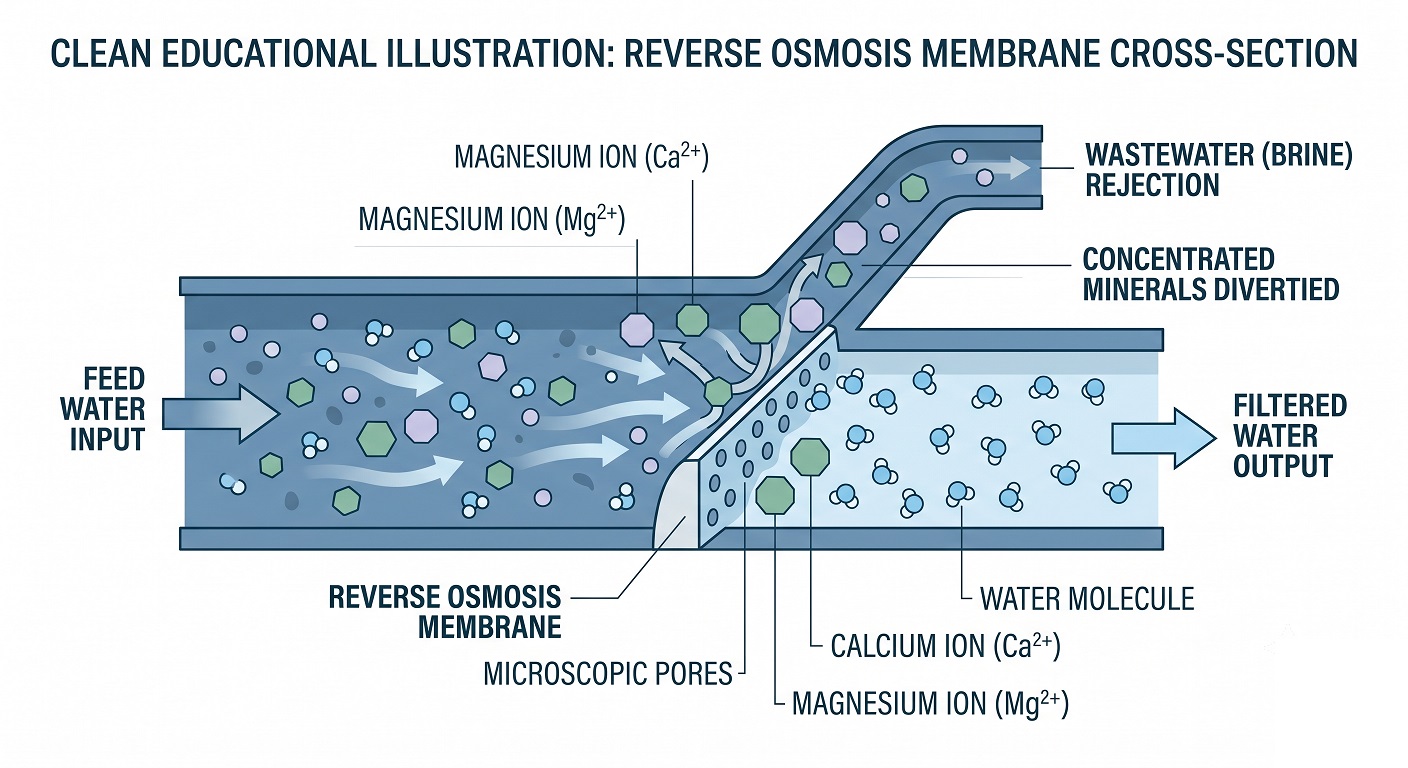
Most RO systems remove 92–99% of dissolved solids, consistent with figures reported in WHO drinking water quality guidelines.
What Calcium and Magnesium Actually Do to Taste
Calcium and magnesium are the two minerals most responsible for how water tastes and feels in the mouth. They contribute body, a mild sweetness, and the slight resistance that makes water feel satisfying rather than thin. At levels found in deionized water, that character disappears entirely.
How Low Minerals Pull the pH Down
Low mineral content also affects pH (a measure of acidity). With almost no dissolved solids to buffer it, RO water absorbs carbon dioxide from the air and drifts toward acidity.
Without dissolved solids to buffer it, RO water typically drifts to pH 5.8–7.2 after brief air exposure, and that lower end of the range is where the sharp or dry sensation most RO owners notice comes from.
For households using RO water for coffee or espresso brewing, low mineral content also affects extraction — calcium and magnesium are the primary carriers of flavor compounds from the grind.
Remineralization is not required for safety. The water coming out of your RO system is clean.
But adding calcium and magnesium back delivers an immediate, noticeable improvement in taste, and most people find the difference obvious from the first glass.
4x Methods to Remineralize RO Water
To remineralize reverse osmosis water, add minerals back using one of four methods: mineral drops added per glass, a remineralization cartridge installed inline on your existing system, an alkaline pitcher with a mineral cartridge, or blending RO water with natural spring water.
Each method restores calcium and magnesium, which reverse osmosis removes almost entirely.
The right method depends on your usage volume, maintenance tolerance, and whether you want something that works at the tap or by the glass. These four options cover the full range, ordered from the simplest to the most integrated.
Mineral Drops: Control by the Glass
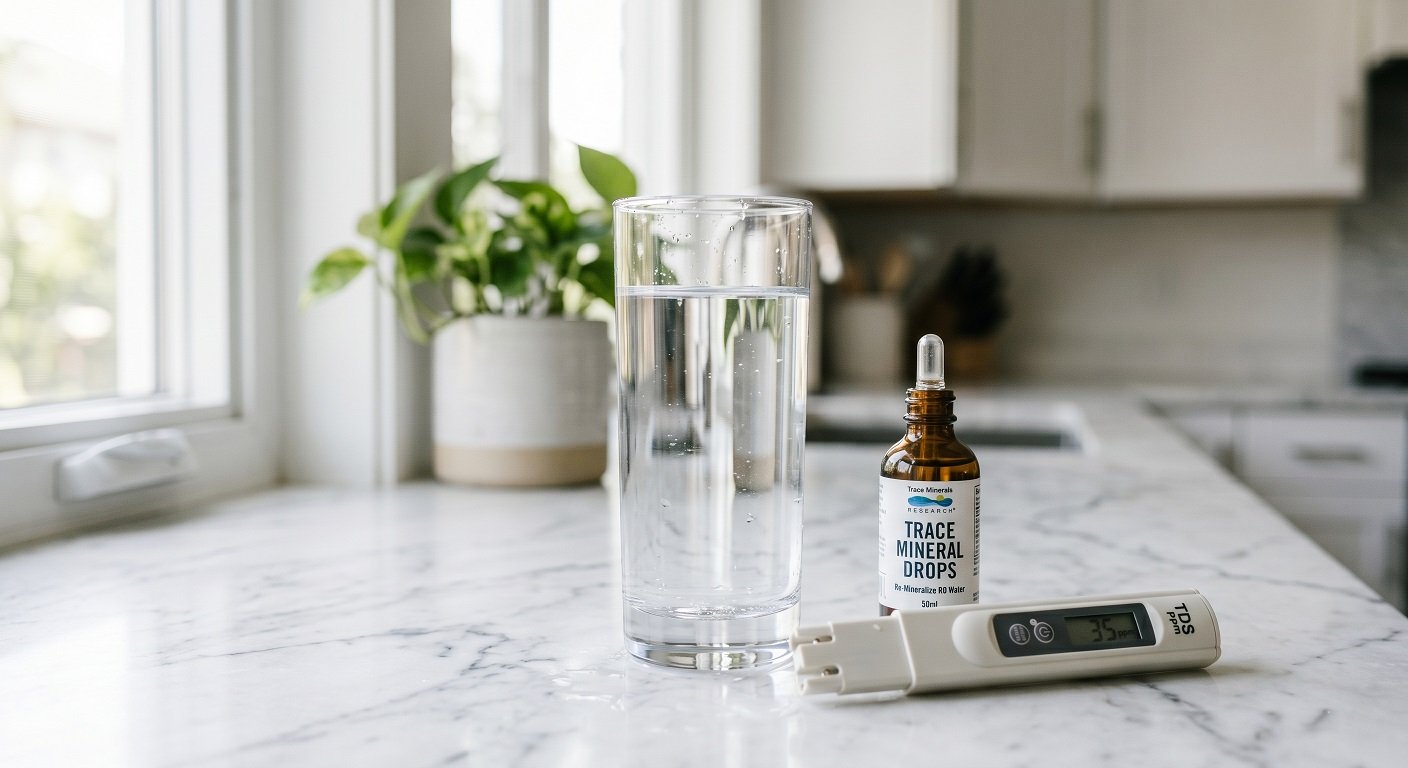
Mineral drops are a concentrated blend of calcium, magnesium, and trace electrolytes, added directly to a glass or pitcher. A few drops per serving dissolve instantly and raise the mineral content without any installation or equipment.
One trade-off to know upfront: consistency depends entirely on the user. Dosing by hand means the mineral level will vary slightly from serving to serving, and hitting a reliable result takes practice.
Drops also function as an electrolyte supplement for RO water, restoring the calcium-to-magnesium balance that filtered water loses.
Drops suit low-volume users and anyone who wants a portable option they can take to the office or while traveling. They require per-serving dosing, which works well for one or two people but becomes tedious for a busy household going through several litres a day.
Most bottles are priced between $15 and $25 and treat roughly 1,000 gallons.
Remineralization Cartridge: Set It and Forget It
A remineralization cartridge installs inline as the final stage of your existing RO system. Water passes through mineral media (calcite and magnesium oxide are the most common types), and picks up calcium and magnesium automatically on every draw.
There is nothing to dose and nothing to measure once it is in place.
The only ongoing commitment is replacement. Most cartridges are rated for 6–12 months or roughly 1,000 litres, so check the spec sheet for the specific model you choose. This method suits households that want a hands-off solution and prefer not to think about their water between service intervals.
Mineral output is consistent and does not depend on the user remembering a dose.
Alkaline Water Pitcher: No Plumbing Required
An alkaline water pitcher uses gravity filtration to pass RO water through a mineral cartridge inside the pitcher body. The cartridge adds calcium and magnesium and raises the pH toward neutral or mildly alkaline.
No plumbing is involved, which makes it a practical choice for renters or small households who cannot or do not want to modify their under-sink setup.
Not all pitchers deliver equally. Mineral output varies significantly by model and cartridge type, and replacement intervals typically run every one to three months depending on usage volume. Some pitchers add a meaningful amount of calcium and magnesium; others add less than their marketing suggests.
When comparing models, look for these four things in the product spec sheet:
- TDS output range: aim for a cartridge rated to deliver 50 to 150 ppm from near-zero RO input
- Calcium and magnesium listed specifically as the minerals added, rather than a vague “mineral blend”
- Cartridge replacement interval: models rated for 3 months are lower maintenance than those requiring monthly swaps
- NSF/ANSI 42 or 53 certification, which indicates the filter performance has been independently tested
Blending with Spring Water: No Device Needed
Blending means mixing RO water with natural spring water at roughly a 1:1 ratio. Use a 2:1 spring-to-RO ratio if you want a higher mineral content.
Spring water carries calcium, magnesium, and natural electrolytes that transfer directly into the blend.
The practical limitation is supply: this method depends on a consistent stock of spring water, which adds ongoing cost and storage. It suits households that prefer a no-device approach and already buy spring water regularly.
Use water labeled as spring water rather than purified or distilled, since purified versions have had their minerals removed.
How to Choose the Right Method
The four methods above are not interchangeable. Household size, usage habits, and convenience preference are the variables that narrow the choice. The health effects of long-term demineralized water consumption are a secondary but valid consideration. WHO guidelines suggest a minimum of 10 mg/L calcium and 10 mg/L magnesium for daily drinking water (WHO, Nutrients in Drinking Water, 2005).
Running through three criteria in order gives you a shortlist without requiring additional research. Each criterion maps to a practical decision rule you can apply to your own household.
1. Mineral type delivered
Drops and cartridges give reliable calcium and magnesium with predictable output. Pitchers vary by model. Blending depends entirely on the mineral content of the spring water you choose.
2. Maintenance requirement
Drops require a dose per serving. Cartridges need replacement every 6–12 months. Pitcher cartridges swap every 1–3 months. Blending requires keeping spring water in stock.
3. Household fit
Drops suit 1–2 people or travel. Cartridges suit families wanting automatic remineralization at the tap. Pitchers suit renters who cannot modify under-sink plumbing. Blending suits anyone who already buys spring water regularly.
One Flag for Specific Health Conditions
One additional consideration applies to a specific group. If you follow a sodium-restricted diet or have a health condition affected by mineral intake, avoid methods that use mineral salts and consult a healthcare professional before adding any mineral supplement to your water supply.
Mineral Targets and Cost Over Time
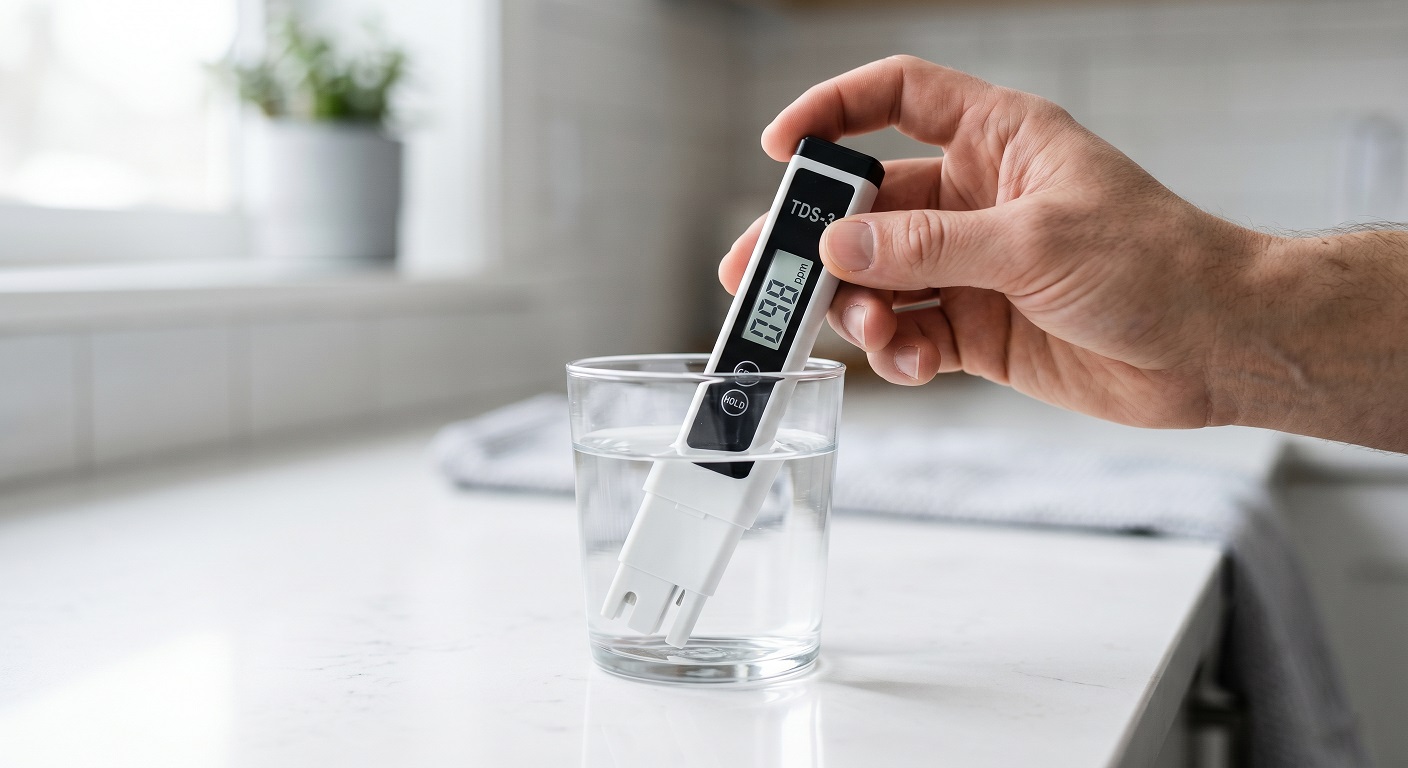
Knowing what numbers to aim for after you remineralize RO water makes the difference between guessing and verifying. Most people remineralize by feel.
A TDS meter gives you something concrete to check, and the targets are simple enough to hit with any of the four methods above.
The Numbers to Hit After Remineralization
The practical TDS target for remineralized RO water is 50–150 ppm (parts per million) for everyday drinking. Within that range, aim for 10–20 ppm of calcium and magnesium combined as the mineral-specific target.
That level is enough to noticeably improve taste and mouthfeel without pushing the water into hard-water territory.
Calcium and magnesium do not need to be added in equal amounts. A calcium-to-magnesium ratio of 2:1 or 3:1 is the practical guideline for taste and absorption.
Most cartridges and drop formulations are already calibrated to this ratio, so separate measurement is only needed for custom blending approaches.
How to Verify Results and Compare Costs
A TDS meter is the most practical verification tool. After remineralization, run a quick reading and confirm you are inside the 50–150 ppm window.
pH strips (paper test strips that indicate acidity or alkalinity) can serve as a secondary check, confirming the water has shifted toward neutral or mildly alkaline.
If your reading comes back above 200 ppm, the water has moved into hard-water territory. The fix depends on your method. For drops, reduce the dose by half and retest. For a remineralization cartridge, check that your flow rate matches the manufacturer’s recommended rate — running water through too slowly can over-saturate it. For spring water blending, increase the proportion of RO water in the mix until the reading falls within the 50–150 ppm target range.
Cost over time varies more than the unit prices suggest. Mineral drops at roughly $0.10 per litre add up to approximately $73 per year for a household drinking two litres per day.
A remineralization cartridge priced at $50 and rated for 1,000 litres covers that same household for under five months, at a lower cost per litre. Two cartridge replacements per year total around $100, but the per-litre cost remains lower than drops for higher-volume households.
Pick the Method That Fits Your Household
There is no single right answer here, and that is the point. Drops, cartridges, pitchers, and blending are all valid ways to remineralize RO water.
Each suits a different household for different reasons. The method that works is the one you will actually use consistently.
Use the three criteria from the previous section as your starting point: mineral type, maintenance tolerance, and household fit. Check your result with a TDS meter once you have chosen, and adjust from there.
Most people notice the difference in taste within the first few glasses. If you want to go further, the next step is understanding what your current RO output actually measures. A baseline TDS reading before you remineralize gives you something concrete to compare against, and it takes about thirty seconds.

Purific Australia sells water purification systems, including some of the products and technologies discussed in this article. This content is written to inform, not to sell. Where a Purific product is a relevant solution, we say so plainly. Where it is not the right fit, we say that too.
All technical claims are based on published research, manufacturer data, or direct laboratory testing. If you have questions about a specific product recommendation or want independent verification of any data cited here, contact our technical team.

tds meter arrived today. before: 3 ppm. added my remineralization drops. after: 81 ppm. this is going to be an obsession isn’t it
can i add minerals back to water after reverse osmosis filtration?
just got my first ro system installed last month and the taste was really bothering me. everyone told me ro water was supposed to be so much better than tap and i thought maybe my system was faulty? spent so long searching before landing on the remineralization rabbit hole. wish the installer had mentioned any of this upfront
i genuinely did not know ro removes calcium and magnesium until last week. i’ve had the system for three years thinking i was doing something good for my health. now i’m down a rabbit hole about should you remineralize ro water and whether i’ve been drinking mineral-depleted water this whole time. probably fine but the lack of upfront info from the retailer is a bit off
honest question: is remineralizing ro water actually necessary or is this another wellness thing that sounds important but isn’t? my diet isn’t bad and i figure i get calcium and magnesium from food anyway. genuinely asking, not trying to be rude
Not rude at all. If your diet is solid you’re probably fine on minerals. The practical reason most people remineralize is taste, not health. RO water without minerals just tastes flat and slightly sharp, and fixing that is low effort. Whether you call it necessary depends on how much the taste bothers you.
we’ve had a reverse osmosis system for about two years and i only just found out it removes calcium and magnesium. my kids drink this water every day. i started looking into remineralization of ro water after reading something about the WHO minimum guidelines and now i can’t stop thinking about it. is the risk actually low for kids or should i be more worried than this article suggests?
The evidence on long-term risk from demineralized water is mixed and most studies focus on populations with already low mineral diets. Kids eating a varied diet are unlikely to be in trouble. That said a remineralization cartridge is the easiest way to stop thinking about it entirely. Worth a chat with your paediatrician if it’s still nagging at you.
installed a remineralization cartridge three weeks ago. tds went from 6 to 94 ppm. my wife noticed without me saying anything. best possible endorsement.
never thought i’d have opinions about water remineralization but here we are. three months in with a cartridge and i don’t think about it anymore which is exactly what i wanted
training twice a day and been spending a stupid amount on electrolyte tablets. someone at my gym mentioned remineralizing ro water covers a lot of the same ground. grabbed some mineral drops for ro water last week and honestly the water just tastes better on its own now. haven’t fully ditched the tabs yet but will compare over the next month
been using an alkaline pitcher for remineralising ro water for about 18 months and honestly the inconsistency is real. some refills taste noticeably different to others and i can never tell if the cartridge is actually working or slowly running out. bought a cheap tds meter eventually and confirmed the output was dropping off well before the “replace every 3 months” label. would have been good to know this before buying
This is exactly why I called out the TDS meter as a verification step rather than optional. The replacement interval on the packaging assumes an average fill rate, not yours. If you’re refilling often it depletes faster. Meter readings are the only reliable signal.
renting so can’t touch the under-sink plumbing. been looking at how to add minerals to ro water naturally without any hardware. the blending with spring water method feels almost too simple but maybe that’s the point
i’m a bit sceptical of the whole ro water remineralization industry tbh. you spend good money filtering everything out and then spend more putting things back in. if water contributes only 5 to 20 percent of daily mineral intake like some sources say, is any of this actually meaningful?
looked into how much himalayan salt to add to ro water properly and the numbers are wild. you’d need way more than a pinch to make any meaningful mineral contribution. glad this article didn’t just say “add himalayan salt” and call it done
Yeah the himalayan salt thing gets shared constantly and the mineral content per pinch is genuinely tiny. You’d be adding enough to taste the salt long before hitting a useful mineral level. Not completely useless but nowhere near a substitute for drops or a cartridge.
the sodium restriction flag is really important and usually missing from articles on this topic. some remineralisation blends use mineral salts and people on blood pressure meds don’t always read the ingredient list. glad you included it.
the coffee extraction bit is what got me down this path. everyone in the specialty coffee world talks about water mineralisation like it’s a religion. i use mineral drops for ro water specifically because they let me dial in a precise calcium to magnesium ratio for different roasts. ended up using them for drinking water too which feels a bit much but honestly the difference is real
family of five. at our volume the cartridge is obviously better than remineralization drops, we’d go through a bottle in no time. one thing missing from the cost section though: installation. had to call a plumber which bumped the first year cost up quite a bit
grew up with naturally hard tap water so switching to ro here felt wrong from the start. couldn’t taste anything bad, it just felt thin somehow. spent a while searching remineralise reverse osmosis water before understanding what was actually happening. the bit about water absorbing carbon dioxide and drifting acidic when there’s nothing to buffer it finally made it click
been experimenting with remineralising ro water for bread dough and the gluten development actually is different. hard to explain but the dough just handles better. would love to see a piece on water for cooking from this site
The TDS target of 50 to 150 ppm feels a bit wide to me. That’s a pretty big range. Tap water in most Australian cities runs anywhere from 50 to 300 ppm depending on the source so at the lower end of that target you’re not really replicating what most people would consider normal drinking water anyway. Would be good to narrow that down or at least explain where the range comes from.
coming at this from the aquarium side. been remineralizing water for planted tanks for years so the concepts here are all familiar. TDS targets, calcium to magnesium ratios, remineralization drops. the 50 to 150 ppm range for remineralized ro water is almost identical to what i aim for in a soft water biotope. nice to see it explained clearly for drinking water
we use ro water in production at a small winery. reverse osmosis remineralization is something we think about constantly. the 2:1 calcium to magnesium ratio here lines up exactly with what we target. good to see the rationale explained rather than just the number dropped in.
Been using an alkaline pitcher for two years and honestly the results are inconsistent. Some refills taste great, some taste like nothing changed. Your note about checking specs rather than trusting marketing claims is the most useful thing I’ve read on this topic. Which pitcher brands have you actually tested?
That inconsistency is a real issue with pitchers. Cartridge media depletes unevenly and most products don’t tell you when output has dropped off. I’d recommend picking up a cheap TDS meter and doing a before and after reading each time you fill it. If the delta is shrinking, the cartridge is on the way out even if it’s not due for replacement yet.
the tds meter tip is the single most useful thing in this article. been trying to remineralise water for months and without a meter you’re completely guessing. found out i was way over target on my first attempt with the blending method. tiny bit of kit, saves so much trial and error
I’m going to push back a little here. The blending method feels like a step backwards. If you’re buying spring water to mix with your RO water you’ve basically undone half the reason you bought an RO system. Drops or cartridges make more sense if purity matters to you.
That’s a fair point Derek. Blending is included because it genuinely works for households that already buy spring water and don’t want another device. You’re right that it reintroduces whatever is in the source water, which is why I’d only suggest bottled spring water from a reputable brand. For anyone prioritising chemical purity over taste, drops or a cartridge are the cleaner choice.
plumber here. remineralization cartridges come up on nearly every ro job i do now. customers are always surprised to hear the water coming out is stripped of minerals. the reverse osmosis remineralization stage is becoming standard on any quote i put together. easy to retrofit too, usually just a push-fit at the final stage
Good to hear from someone on the install side. Most people find out about the mineral issue after buying, not before. Anything you think homeowners should be asking their installer upfront?
Just installed my first RO system last month and was genuinely surprised by how flat the water tasted. I assumed filtered meant better and couldn’t figure out why it felt so unsatisfying to drink. This article explained it in plain terms without making me feel like I needed a chemistry degree. Ordered mineral drops this morning.
Thank you for including the WHO guideline numbers. I’ve been worrying about whether long-term RO water is actually fine for my kids and nobody ever gives you a concrete target. The 10 mg/L minimum for calcium and magnesium gives me something to actually verify rather than just reading conflicting forum opinions.
That’s exactly why I wanted to include it. Most concern around demineralized water is based on real WHO research but it rarely gets translated into practical numbers people can check at home. A TDS meter paired with those targets gives you a simple verification step. Hope it helps.
four months using remineralization drops for ro water. portability is the main reason i chose drops over a cartridge since i travel a lot. the consistency thing is real though. i’ve accepted i’ll never hit the same tds twice doing it by hand. fine for one person, probably frustrating for a family
Installed a remineralization cartridge last weekend following this guide as a reference. Took about 25 minutes including the time I spent reading the instructions twice. TDS went from 4 ppm to 87 ppm after installation and the water tastes completely different. Worth every cent.
I use remineralized RO water for my planted freshwater tank so I found the mineral ratio section really interesting. The 2:1 or 3:1 calcium to magnesium target lines up with what most serious aquarists aim for too. Nice to see the numbers backed up with a reason rather than just thrown out there.
Good to see the sodium restriction flag included. A lot of remineralization products use mineral salts and people on low-sodium diets or with hypertension don’t realise how quickly small daily additions can add up. That caveat should be in every article on this topic and it’s usually missing. Well done for including it.
Really appreciate you flagging that Carla. Coming from a dietitian it means a lot. I’ll look at making that section more prominent in a future revision.
The cost comparison breakdown is genuinely useful. Most articles either ignore cost entirely or just quote the upfront price of the device. Working out the per litre cost over a year for a two litre per day household is the kind of practical math that actually helps you decide. Would love to see this expanded with a third or fourth scenario for larger families.
Honestly I was hoping for brand recommendations. I get that you don’t want to play favourites but when you say “check product specifications before buying” for pitchers, that’s not much help if you don’t know what to look for in the specs. What numbers should I actually be comparing?
Fair feedback Sandra. Look for pitchers that list output TDS or output mineral content in mg/L rather than just claiming “alkaline” or “mineral-rich” on the packaging. If a product only tells you the input filter rating and not the output mineral level, that’s a red flag. I’ll add a buying criteria section to the article soon.
i’ve been reading about ro water remineralization for a while and the long-term health evidence always feels murky. appreciate that the article is upfront about that rather than pretending it’s settled. my concern is that most people don’t track their diet carefully enough to confidently say food covers the mineral gap. not panicking but i think that assumption gets too little scrutiny
Fair point and I don’t want to oversell the “diet covers it” line. WHO guidance is based on average intakes and not everyone eats an average diet. If you’re already low on calcium or magnesium, adding a remineralizing step is a cheap, low-effort way to close some of that gap. Not a substitute for proper advice but not nothing either.
Back home the tap water is very hard so I always drank it without thinking. Moving to Australia and switching to RO here was a big change. I couldn’t explain why the water tasted wrong until I read this. It’s not that the water is bad, it’s that it’s missing something I was used to. That’s a really useful reframe.
I install RO systems for a living and remineralization cartridges come up in almost every job now. Customers always ask me about the flat taste after installation and I’ve been telling them the same thing for years. Nice to have a clean article to send them to instead of trying to explain it on the spot at the end of a job.
The coffee mention caught my eye but I want to add that this matters just as much for tea. Green tea especially is very sensitive to water mineral content. I’ve been blending my RO water with a small amount of spring water and it’s made a noticeable difference in the cup, more clarity and a softer finish. Glad to see this topic getting proper coverage.
Finally an article that connects RO water to coffee extraction. I’ve been using an inline remineralization cartridge for about eight months and the espresso is noticeably rounder. The part about calcium and magnesium being flavor carriers from the grind is exactly what I was trying to explain to my flatmate last week. Good write-up.
Thanks Marcus! The coffee angle is one of the more underappreciated reasons people end up down the remineralization rabbit hole. Once you’ve dialled in mineral content for espresso it’s hard to go back to straight RO. Glad it clicked.
ordered the drops. will report back
I train twice a day and hydration is something I take seriously. I’ve been spending money on electrolyte tablets and it never occurred to me that just fixing my drinking water baseline would cover a good chunk of what those tablets are doing. Going to try the cartridge route and see how my recovery feels over a few weeks.
Quick question. The article mentions cartridges last 6 to 12 months or roughly 1000 litres. For a family of four drinking about 8 litres a day that works out to about 4 months per cartridge. Is that right? Just want to make sure I’m budgeting correctly before I commit to an inline setup.
Your maths is spot on Ryan. At 8 litres per day you’re looking at around 125 days per cartridge, so roughly three replacements a year. At about $50 per cartridge that puts you at $150 annually for a family of four, which still works out cheaper per litre than drops at that volume.
I work with patients who are advised to drink more water and RO systems are popular in a lot of households here. The section on long-term demineralized water and WHO minimums is something I’ll be referencing. A lot of people assume filtered automatically means healthier without thinking about what gets removed along with the bad stuff.
We have an RO system at the gym and a few members have been asking about the water quality. I was just telling them it was clean without really thinking about the mineral side of things. Going to look at adding a remineralization cartridge to the setup. The electrolyte angle is particularly relevant for people drinking water post-workout.
Water is something professional cooks talk about more than most people realise. The mineral content affects everything from pasta water to bread dough hydration. I’ve been experimenting with remineralizing my RO water for baking and the gluten development is noticeably different. Would love a piece from this site specifically on water for cooking.
I appreciate that the article doesn’t push a product. So many of these guides are thinly veiled ads. Reading through this I kept waiting for the pitch and it never came. That’s rare and it made me trust the information a lot more.
We started using RO water when our daughter was born because we were worried about contaminants. Never thought about whether removing everything was also removing things she needs. This article raised a question I hadn’t considered before. Will be talking to our paediatrician about it now.
The mineral content point extends into winemaking too. We use RO water at the winery during production and water chemistry is something we think about a lot. The 2:1 calcium to magnesium ratio mentioned here is very close to what we target for our process water. Good to see the rationale explained properly rather than just stating a number.
The pH explanation is the clearest I’ve read. A lot of articles just say RO water is acidic without explaining the mechanism. The detail about water absorbing carbon dioxide from air and drifting toward acidity when there are no dissolved solids to buffer it is something I can actually use in class when teaching water chemistry.
I spent about three hours last night reading conflicting information about RO water and whether it’s actually bad for you long term. Some sources say it’s fine, some say mineral deficiency is a real concern. I still don’t feel like I have a definitive answer and this article, while helpful on the how, doesn’t fully resolve the why I should bother question for me.