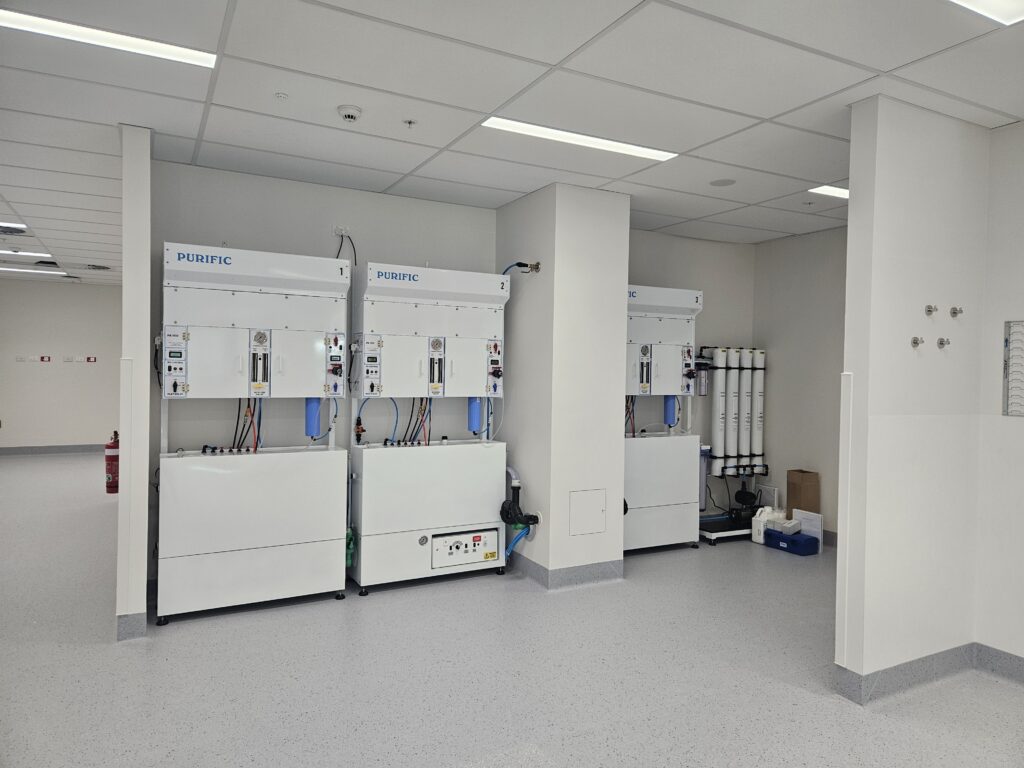

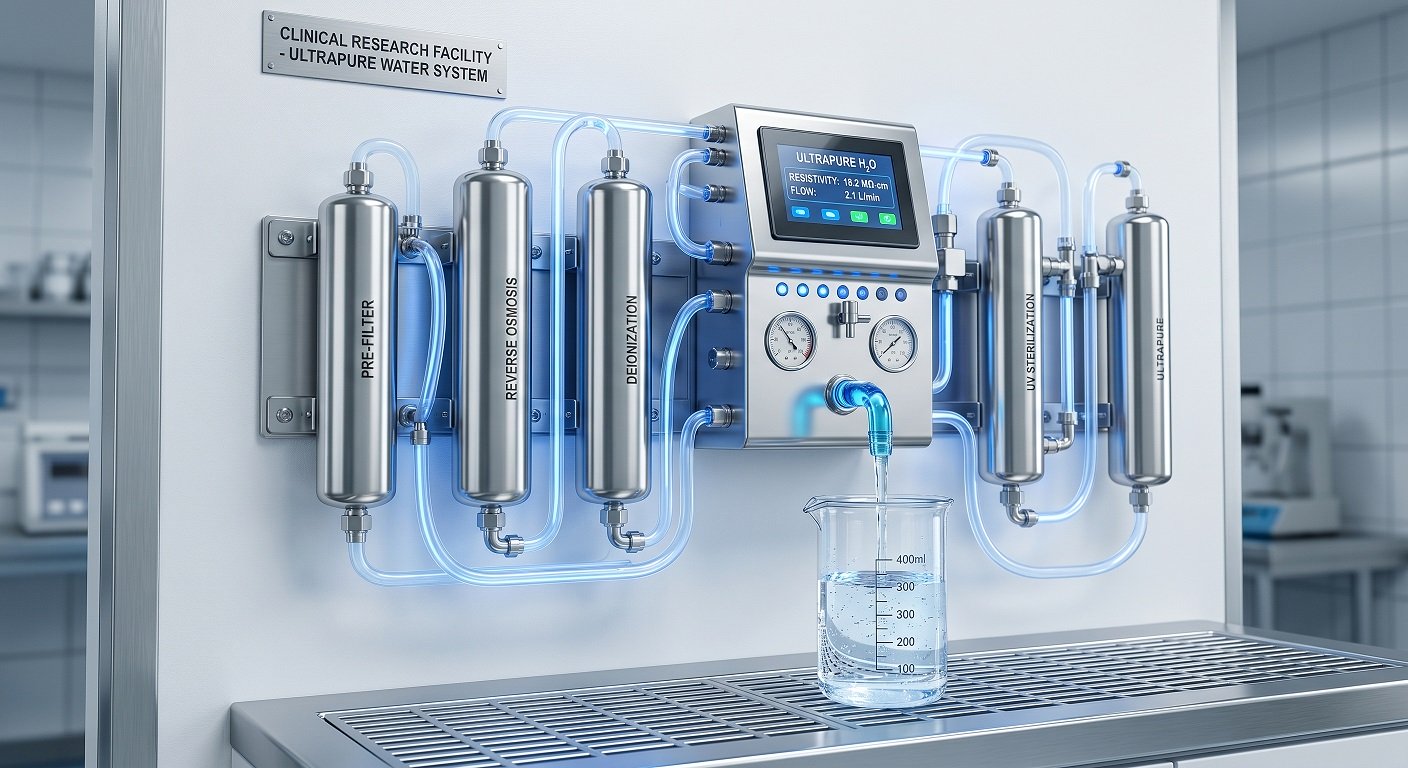
Medical grade water is a highly purified form of water that has been processed through multi-stage systems to meet stringent regulatory standards such as those set by the USP or ISO.
Achieving this ultra-pure state requires validated technologies like Double-Pass Reverse Osmosis, Electrodeionization, and Sterile Filtration to eliminate endotoxins and microbial contaminants.
By mastering these complex purification tiers, facilities can ensure absolute patient safety and the precision required for high-stakes clinical applications.
Most lab managers think they are buying a water purification system, but they often overlook the long-term impact of lab water system maintenance.
Types and Grades of Medical Grade Water
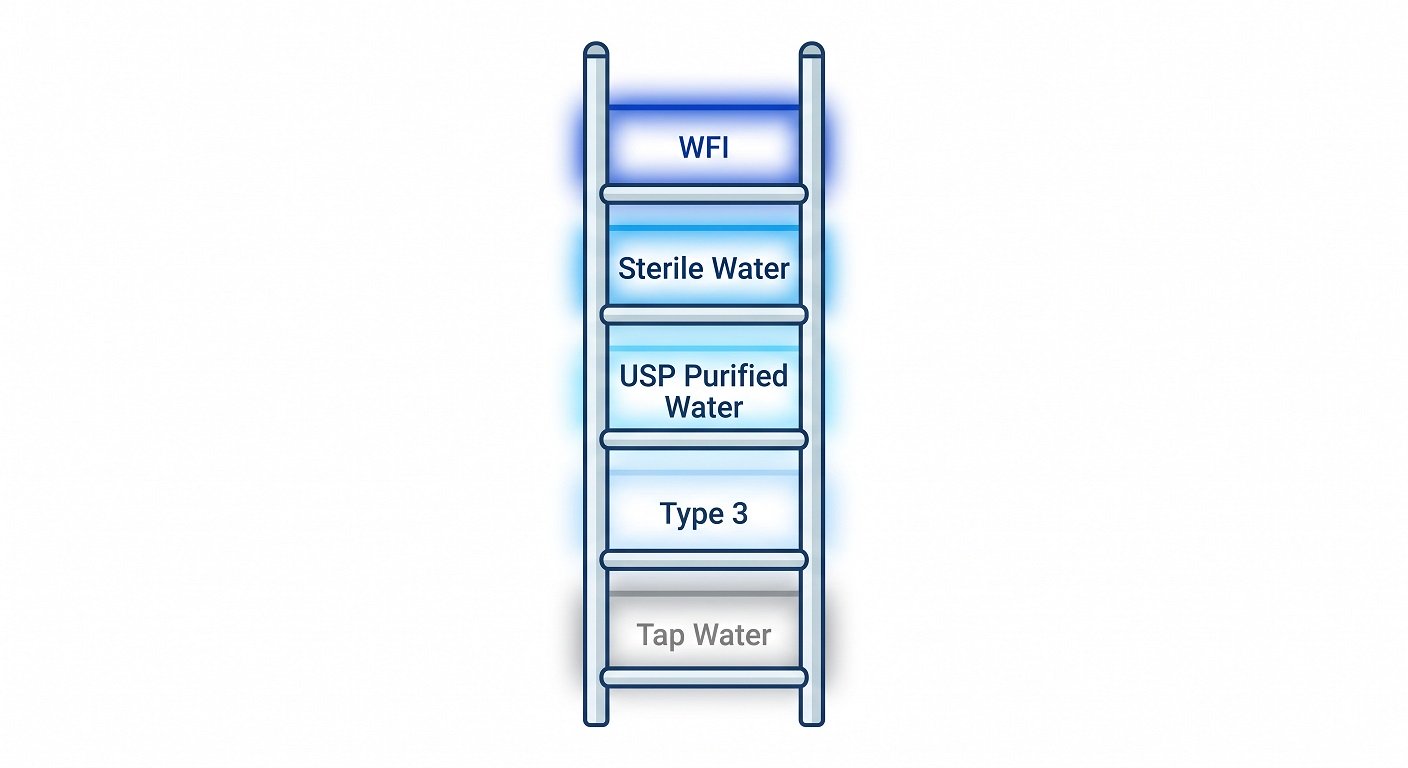
Think of medical water as a ladder. At the bottom, you have the stuff that comes out of your kitchen tap.
It is fine for a glass of water, but it is considered dirty in the eyes of a scientist. As you climb higher, the water gets hungrier, cleaner, and much more regulated.
Each step up this ladder requires more energy, more filtration, and more documentation to prove its purity.
Specifically, choosing the wrong rung on this ladder can lead to equipment damage or clinical errors.
USP Purified Water (PW)
Think of USP Purified Water as the baseline of the medical world. It is the starting point for almost everything that is not injected directly into a vein.
This water has gone through a massive transformation to remove the minerals and chemicals that make tap water taste good but cause medical processes to fail. In fact, if you are using water to clean a dental chair or mix a basic topical cream, this is the gold standard you are aiming for.
While this baseline purity is impressive, some medical procedures require a grade so safe it can be introduced directly into the human bloodstream.
Standards for Non-Sterile Applications
In a medical setting, PW is used for applications where the water does not enter the human vascular system. Specifically, it must be free of ionic impurities but does not necessarily need to be sterile.
This makes it perfect for the initial cleaning of surgical equipment or the preparation of non-sterile oral medications.
If you have ever wondered why medical tools do not have water spots after a wash, it is because this grade of water has had its mineral content stripped away.
The “Bulk” Water Requirement for Pharma
Pharmaceutical manufacturing requires massive volumes of water. In fact, this water often serves as a cleaning agent or a solvent in non-sterile medicine production.
Therefore, maintaining a high flow rate without sacrificing conductivity standards is the primary engineering challenge for bulk systems.
When a factory produces thousands of liters of cough syrup, every drop of that water must meet USP standards to ensure the medicine remains stable and safe for the consumer.
Water for Injection (WFI)
When we talk about WFI, we are moving from very clean to absolutely sterile. This is not just about removing dirt; it is about removing the microscopic remnants of life itself.
If a fluid is going to be pumped into a patient’s vascular system, there is zero room for error. Consequently, the systems that produce WFI are the most complex, most monitored, and most expensive in the entire purification industry.
Beyond the liquid itself, certain clinical scenarios demand water that is specially packaged to remain biologically inert in a sterile field.
Why “Pyrogen-Free” is a Non-Negotiable
WFI is the most critical grade. Because this water goes directly into the bloodstream, it must be pyrogen-free.
Pyrogens are fever-inducing bacterial fragments.
Even if the water is sterile, these fragments can trigger a massive immune response in patients. Specifically, WFI systems must be able to prove they have neutralized these biological ghosts through extreme heat or ultra-filtration to ensure a patient’s temperature does not spike during an IV treatment.
Distillation vs. Membrane-Based WFI
Traditionally, distillation was the only way to achieve WFI. You essentially boil the water and catch the steam, leaving contaminants behind. However, modern membrane-based systems are now widely accepted and often more reliable.
These systems utilize advanced ultra-filtration to achieve the same results with significantly lower energy costs.
In fact, many modern hospitals are switching to membrane systems to hit their green energy goals without sacrificing safety.
What is Medical Sterile Water?
Medical sterile water is a specific subset of purified water that contains no living microorganisms. Unlike Purified Water which might be used in bulk for cleaning, sterile water is usually packaged in single-dose containers for immediate clinical use.
It is essential for wound irrigation and as a diluent for medications where any bacterial presence could cause a life-threatening infection.
In fact, using non-sterile water for these tasks can lead to immediate clinical failure and severe patient complications.
While sterile water protects the patient, the lab technician often looks for a different classification of purity based on electrical resistance and ionic content.
What is Type 3 Water?
In the laboratory world, we often rank water by Types 1, 2, and 3. Type 3 is considered Primary Grade water. It is produced via Reverse Osmosis and is used for basic lab tasks like rinsing glassware or feeding autoclaves.
While it is much cleaner than tap water, it is not pure enough for sensitive blood tests or injections. Specifically, it acts as the feed water for the even more advanced filters that produce Type 1 water, which is the purest liquid known to science.
Recognizing these different grades is just the beginning; the real question is how we actually strip water down to these microscopic levels without damaging expensive equipment.
Key Purification Processes
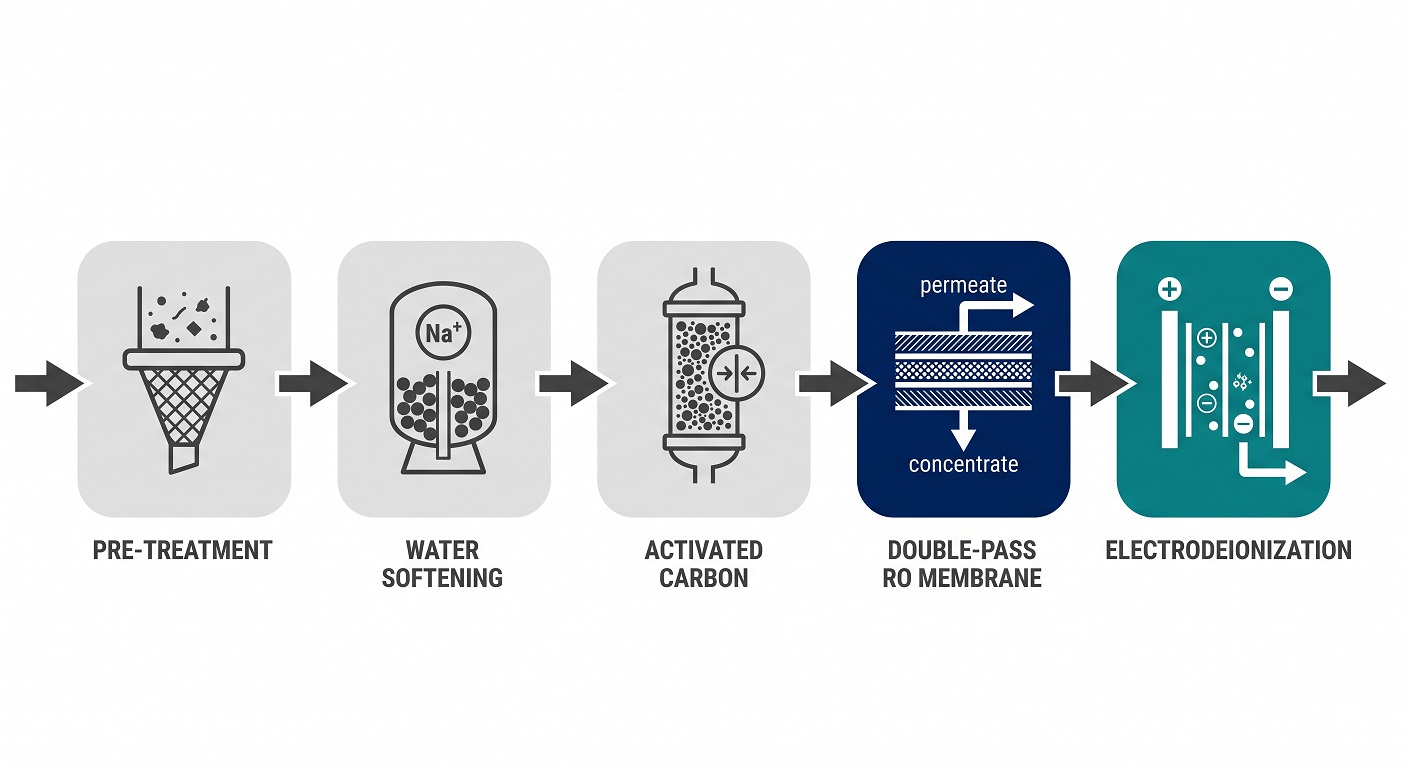
In a medical water system, we do not just use one filter. Instead, we use a series of barriers. If one fails, the next one catches the dirt.
This redundancy is precisely what keeps patients safe and systems operational.
This multi-barrier approach is what defines professional-grade purification. Specifically, a well-designed system ensures that the water becomes progressively cleaner as it moves through each specialized stage.
Pre-Treatment: The First Line of Defense
You cannot just shove raw tap water into a high-end medical filter and expect it to survive. In fact, doing so is the fastest way to turn a $20,000 membrane into a useless piece of plastic.
Pre-treatment is the bodyguard of your system. It is a series of heavy-duty filters designed to take the initial punch from chlorine and heavy minerals so the delicate medical filters can do their job in peace.
Once the water is softened and safe for the system, it is time for the most powerful stage of molecular separation to begin.
Water Softening to Prevent Component Scaling
Tap water is full of calcium and magnesium. When you heat it up, that calcium turns into rock, commonly known as scale.
Furthermore, this scale can destroy a high-performance RO membrane in weeks by clogging its microscopic pores. Therefore, we use water softeners to swap those hard minerals for sodium, keeping the water slick and safe for the high-pressure components that follow.
Activated Carbon for Chlorine Neutralization
Cities put chlorine in water to kill germs in the pipes. However, chlorine eats the rubber seals and delicate membranes inside medical filters. In fact, just a few parts per million can ruin a system.
Specifically, we use massive tanks of activated carbon to sponge up the chlorine before it can do any damage to the downstream membranes.
This ensures the expensive components are not chemically burned by the very chemicals meant to keep the water safe.
Advanced Membrane Filtration
This is where the real heavy lifting happens at a molecular level. While a standard filter might catch a grain of sand, advanced membranes work on a scale so small that even the most stubborn dissolved salts are left behind.
Specifically, this stage is what separates bottled water from medical grade water. It requires immense pressure and precision engineering to force water molecules through barriers that stop everything else in their tracks.
Even after the finest membranes have done their work, a few charged particles often remain, requiring a process of ionic polishing to achieve total purity.
The Physics of Double-Pass Reverse Osmosis
Imagine a screen door that blocks even the smallest dust particles. That is Reverse Osmosis. Specifically, in a Double-Pass system, we take the clean water from the first filter and put it through a second one.
This ensures that even the most stubborn ions are rejected, providing an extra layer of security.
It is like double-filtering your coffee to make sure not a single grain of sediment makes it into the cup.
Nanofiltration vs. Ultrafiltration in Medical Contexts
Sometimes we need to be picky. Nanofiltration removes specific ions and softening agents, while ultrafiltration is our heavy hitter for removing those pyrogens and bacteria we talked about earlier.
Consequently, the choice of membrane determines the final safety profile of the fluid for clinical use.
Ultrafiltration is particularly valuable in hospitals because it acts as a mechanical barrier against viruses that standard filters might miss.
Ionic Polishing and Technical Choice
Even after the best filters, some ghosts remain in the water in the form of charged ions. Ionic polishing is the final detox for your water supply.
This stage is not about bulk filtration. It is about chemical perfection.
To reach ultra-pure targets such as 18.2 megohm-cm, water is refined using advanced processes like deionization or distillation, each with distinct technical strengths depending on the medical or laboratory application.
The choice between these methods is not arbitrary. Differences in ionic removal, consistency, and downstream performance can be significant, which is why understanding deionized vs distilled water is essential when specifying medical-grade systems.
Stripping the ions is vital for chemistry, but we must also ensure that the water remains biologically safe from microscopic intruders.
Electrodeionization (EDI) for Continuous Purity
EDI uses electricity to pull ions out of the water. It is a brilliant technology because of its ability to produce very consistent quality water for long periods of time.
In fact, it allows for a continuous flow of ultra-pure water with zero downtime for regeneration. This is perfect for 24-hour medical facilities that have very constant consumption of Di water.
The one of the weaknesses of EDI purification is it delicate nature requires very good quality pretreated water via the sediment, activated carbon, and RO stages to ensure premature failure does not occur.
Another downside of EDI is its high replacement cost. Because these systems are best suited to constant production, the cost may not make sense for a regional laboratory or one with fluctuating workloads requiring varying water demands.
Microbiological Control
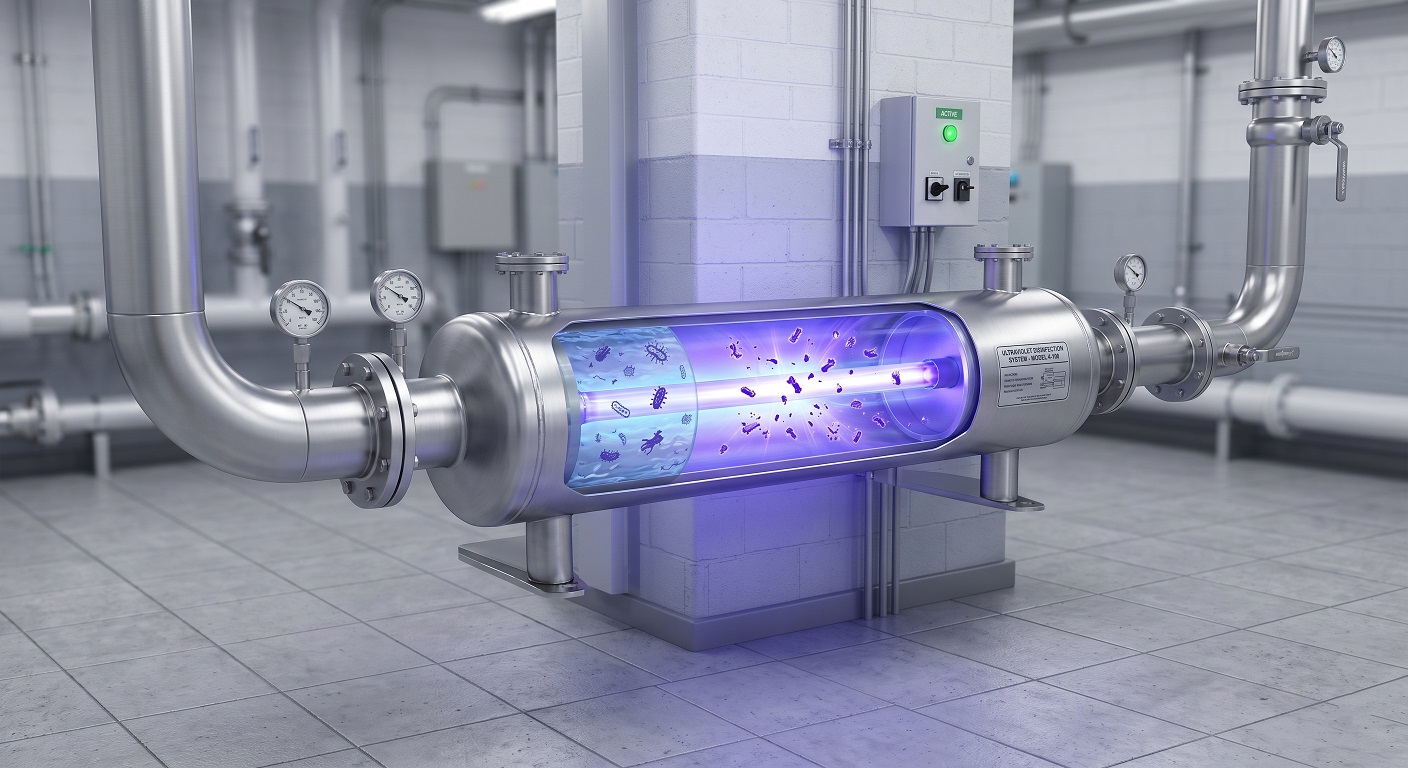
Because water is the foundation of life, bacteria are constantly trying to find a way back into it. Even in a sealed system, a single stray microbe can grow into a colony (biofilm) within hours.
Therefore, microbiological control is not a one-time event; it is a continuous, 24/7 war against contamination.
We use invisible light and powerful gases to ensure the water stays as pure as the moment it was filtered. With the water now biologically and chemically perfect, the next challenge is seeing how this pure resource transforms the daily operations of a modern hospital.
UV Sterilization at 254nm
We shine a specific type of UV light through the water as it circulates. This light scrambles the DNA of any bacteria, making it impossible for them to function.
Consequently, they become biologically dead and cannot reproduce, keeping the system sterile. This is a non-chemical way to ensure that the water loop remains safe without adding any weird tastes or smells to the liquid.
Ozone Sanitation Systems for Loop Piping
Ozone is a powerful gas that kills everything it touches. We often use it to wash the pipes that carry medical water throughout a hospital. Specifically, this prevents the growth of biofilms that could otherwise compromise an entire facility’s safety standards.
Think of it as a chemical power-wash for the inside of the pipes that happens automatically while the hospital sleeps.
How is Medical Grade Water Used in Healthcare
Pure water is the silent partner in almost every hospital success story. From the basement to the operating room, it is working behind the scenes to ensure that clinical outcomes remain predictable and safe.
Without it, modern medicine would essentially grind to a halt.
In fact, the quality of a hospital’s water is often a direct indicator of its overall patient safety ratings.
Clinical & Surgical Applications
Inside a hospital, pure water is used in ways most patients never see. From the humidifiers in the ICU to the giant washers in the sterile processing department, the quality of your water directly affects the quality of your care.
If the water fails, the surgery stops.
Specifically, understanding these applications helps facilities realize that purification is not just a utility; it is a life-saving medical device in its own right. While surgery relies on bulk cleanliness, the diagnostic side of medicine requires water that is a complete blank slate for chemical testing.
Why Hard Water Ruins Expensive Surgical Tools
If you use tap water in a $100,000 autoclave, you will end up with pitting and rust on stainless steel instruments.
In fact, the minerals in the water can cause permanent structural damage to surgical tools, making them dull and dangerous.
Therefore, high-purity water is actually a cost-saving measure for hospital budgets because it keeps tools in service for years longer.
Autoclave Feed Water Requirements
An autoclave turns water into steam to kill germs. If that water is not pure, the steam carries minerals that can clog the delicate valves and sensors of the machine.
Consequently, the machine may fail a sterilization cycle, putting patients at risk of post-operative infections.
Using medical grade water ensures the steam is as pure as the tools it is meant to clean.
Laboratory Diagnostics and Research
A modern medical lab is a place of extreme precision, and ordinary water is its biggest enemy. If you are testing for a rare disease or a specific hormone, the water used to rinse the equipment must be a blank slate.
If it is not, you are not testing the patient; you are testing the contaminants in your tap water.
In fact, most lab equipment will simply refuse to run if the sensors detect the water purity is not perfect. This level of laboratory purity is so intense that it raises a curious question: is water this pure actually safe for a human to consume?
Preventing “Noise” in Clinical Immunoassays
In a lab, noise is anything that interferes with a test signal. Specifically, even a tiny bit of silica or organic carbon in the water can mimic a medical condition on a test result, leading to a misdiagnosis.
This is why Type 1 water is non-negotiable for clinical research.
It ensures that the results the doctor sees are 100% accurate to the patient’s actual health.
Reagent Grade Water for Accurate Patient Testing
Scientists use reagents, which are liquids that react with your blood to show results. These reagents are often diluted with medical grade water.
If the water is not perfect, the reagent will not work correctly. Consequently, the patient might receive a false negative or positive result, which can be devastating for treatment plans.
Accuracy in the lab starts with the purity of the water in the sink.
Can I Drink Medical Grade Water?
Technically, yes, you can, but you probably should not. Because medical grade water is so pure, it is ionically hungry.
This means it can actually pull minerals out of your body as you drink it. Furthermore, it lacks the minerals that make water taste good, often resulting in a flat or bitter taste.
Specifically, it is designed for machines and medicine, not for refreshing hydration. In fact, drinking it long-term can lead to mineral deficiencies in your teeth and bones.
Drinking medical water may be a niche concern, but understanding the broader medical definition of fluids is vital for understanding patient care.
What is a Fluid in Medical Terms?
In a medical context, fluid is a broad term that includes water, blood, saline, and lymph.
However, when a doctor refers to medical fluids, they are usually talking about intravenous solutions that use medical grade water as their primary carrier.
Understanding the difference between raw water and a controlled medical fluid is the cornerstone of modern therapy. In fact, the purity of the carrier fluid is just as important as the medication it holds for patient recovery.
While understanding these practical applications is vital, ensuring your system remains legal and operational requires a deep dive into the strict world of healthcare data and oversight.
Compliance, Monitoring, and the Law
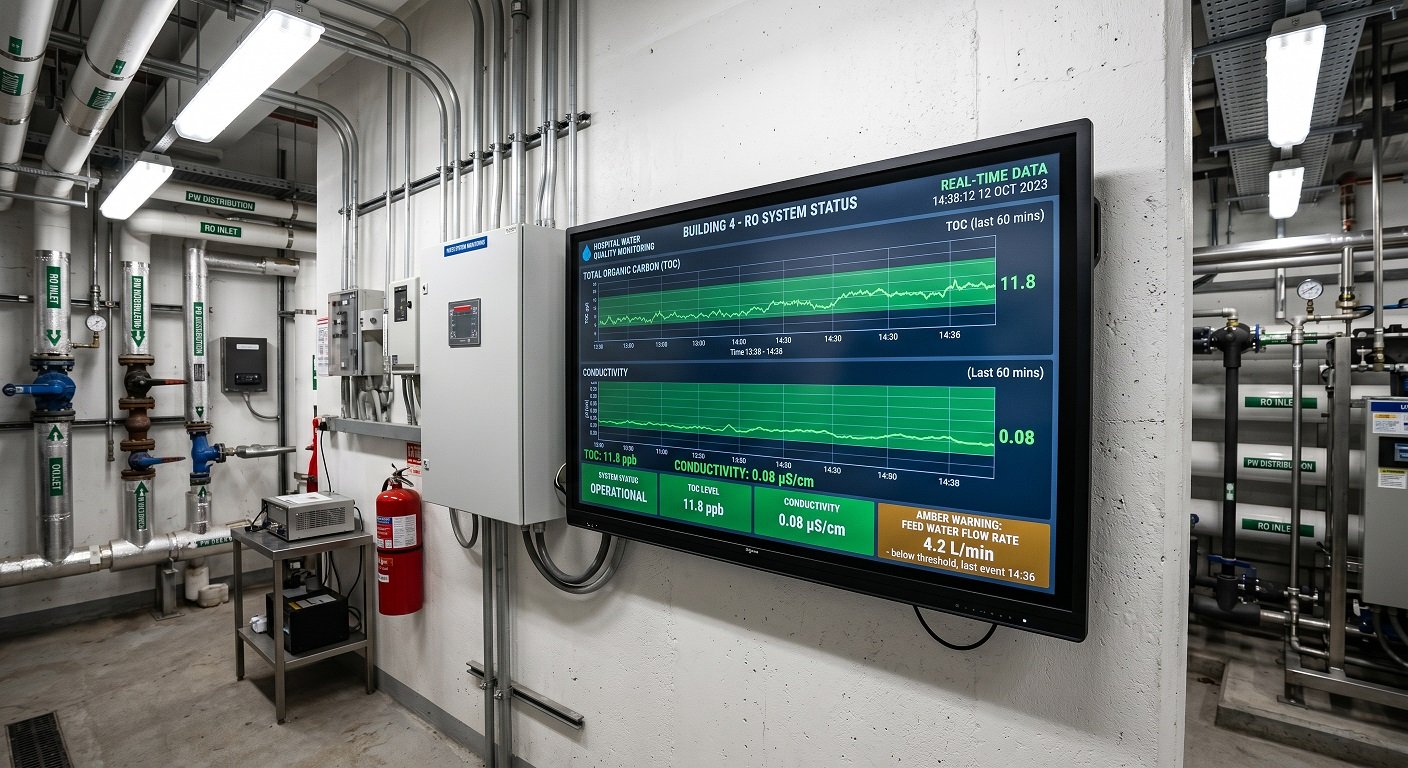
In the medical world, if you did not write it down, it did not happen. Compliance is about proving your water is as pure as you say it is, every single hour of every single day.
This transparency is what builds trust between facilities and their patients.
In fact, many hospitals now use digital dashboards to track their water quality in real-time, allowing them to spot trends before they become problems.
Understanding USP and AAMI Standards
Navigating the legal world of water purity can feel like reading a foreign language. However, these standards exist for one simple reason: to keep people alive.
Organizations like the USP and AAMI have spent decades defining exactly how many parts-per-billion of a certain chemical are allowed. Following these rules is not just about avoiding a fine; it is about maintaining the integrity of the entire healthcare system.
Following these rules is impossible without a way to watch the water quality in real-time, rather than waiting for a lab report.
Real-Time Monitoring vs. Grab Sampling
How do we know the water is pure right now? In the past, you would take a sample to a lab and wait days, but by then, the bad water has already been used.
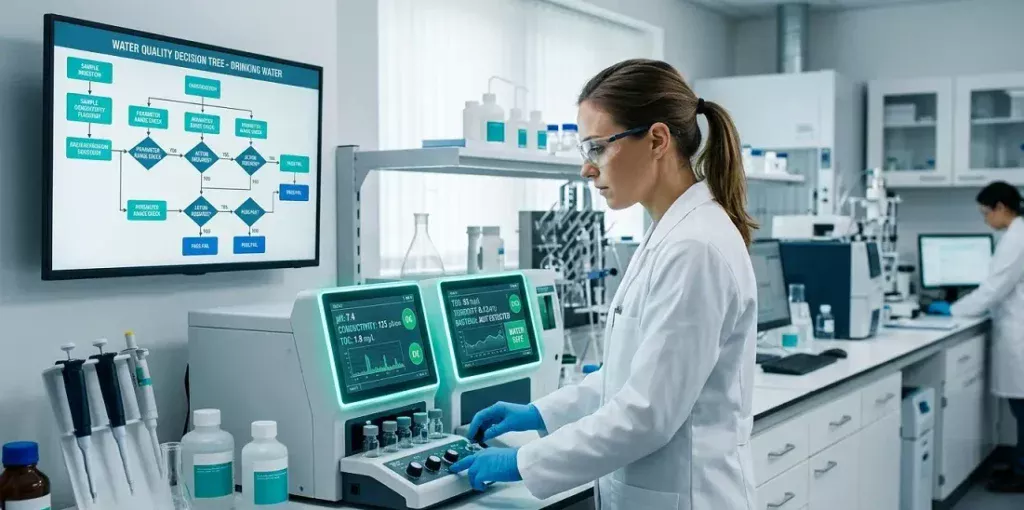
Modern medical systems have moved toward real-time monitoring. This means we have digital eyes inside the pipes at all times, ready to sound the alarm the second a single contaminant is detected.
In fact, this is now a requirement for most high-grade facilities to maintain their accreditation. These monitors track many variables, but two specific metrics serve as the ultimate litmus test for medical safety.
Total Organic Carbon (TOC) Thresholds
TOC measures how much organic stuff is in the water. In medical grade water, we want this number to be near zero.
Specifically, high TOC levels can indicate a bacterial outbreak in your storage tanks before it becomes a visible or dangerous problem.
It is like a smoke detector for your water system, catching the smoke of carbon before the fire of a bacterial infection breaks out.
Conductivity: The Instant Purity Metric
Conductivity measures how well electricity flows through the water. Pure water is actually a terrible conductor.
Therefore, if the conductivity goes up, we know the water is getting dirty because there are more dissolved ions in the liquid. This metric is the primary way we verify that the RO membranes are doing their job correctly.
Consequently, if the conductivity spikes, the system can automatically divert bad water away from clinical areas.
Validation and Documentation (IQ/OQ/PQ)
Validation is the process of proving that your system does exactly what it says it does. Specifically, this involves Installation, Operational, and Performance Qualification.
It is a rigorous paper trail that proves to inspectors that your facility is operating within safe margins. In fact, proper documentation is often the difference between a successful audit and a forced shutdown by regulatory bodies.
It is the final exam for any new medical water system.
Navigating these complex regulations may feel overwhelming, but following a few key principles can simplify your facility’s path to total water safety.
Passing a Medical Audit with Proper Maintenance Logs
When an auditor walks into a clinic, they want to see the logs. Specifically, they want to see exactly when the filters were changed and what the purity was on a Tuesday at 3:00 AM.
In fact, automated logging is now the industry standard for high-performance clinics, replacing messy hand-written notes.
A clear log proves that you take patient safety seriously and that your water system is being maintained by professionals.
Navigating the World of Medical Grade Water
Mastering medical grade water is not just about buying a filter; it is about understanding a complex, multi-stage journey. We have covered everything from the pyrogen-free requirements of Water for Injection (WFI) to the mechanical safeguards of Double-Pass Reverse Osmosis.
Specifically, the goal of any medical-grade system is to provide a consistent, validated barrier against contaminants that could compromise patient care or laboratory accuracy.
In fact, the most successful facilities are those that treat their water system as a living piece of medical equipment. By prioritizing pre-treatment, monitoring real-time conductivity, and adhering to USP standards, you can avoid the costly pitting of surgical tools and the noise of contaminated lab results.
Ultimately, it is about creating a foundation of purity that supports every other medical action.
If you are currently evaluating your water purification needs, keep these three Golden Rules in mind to ensure your success:
3 Golden Rules
- Do not pay for WFI-grade water if your application only requires USP Purified water. Specifically, knowing your required Type 1, 2, or 3 will save thousands in annual maintenance and energy costs.
- Never skip the water softener or carbon tank. In fact, these simple components protect the most expensive parts of your system, extending the life of your membranes by years and preventing catastrophic failure.
- Ensure your system has real-time TOC and conductivity monitoring. Therefore, if a breach occurs, you can stop the flow before the water ever touches a patient or a reagent. In the end, your data is your proof of safety.
Medical grade water is the silent foundation of modern healthcare. When you invest in the right technology and follow the correct protocols, you are not just purifying water; you are protecting your reputation and your patients.

Purific Australia sells water purification systems, including some of the products and technologies discussed in this article. This content is written to inform, not to sell. Where a Purific product is a relevant solution, we say so plainly. Where it is not the right fit, we say that too.
All technical claims are based on published research, manufacturer data, or direct laboratory testing. If you have questions about a specific product recommendation or want independent verification of any data cited here, contact our technical team.