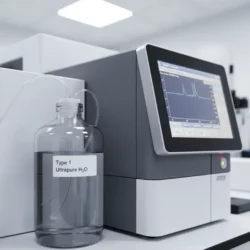
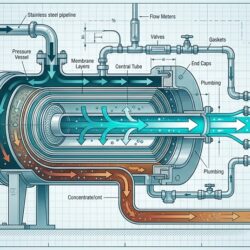
Deionized water vs distilled water is a debate that confuses most lab managers. Many facilities still use outdated distillation methods simply because they have always done it that way.
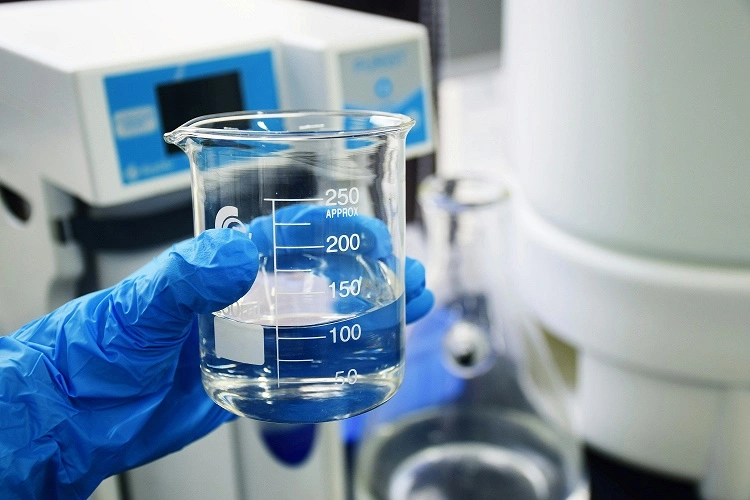
In reality, the technical differences between these two processes determine the accuracy of your results and the longevity of your equipment.
Here is the problem:
Distillation is an ancient process that has not kept pace with modern lab requirements. If you want to optimise your facility, you need to understand the science behind your water supply.
How Distillation Works
Distillation is one of the oldest forms of water purification. The process involves boiling water into steam and condensing it back into a liquid state in a clean container.
Specifically, this method relies on the difference in boiling points between water and its contaminants.
Most heavy metals and large molecules do not evaporate with the water. However, distillation is notoriously energy intensive. Actually, it often fails to remove volatile organic compounds that have boiling points similar to water.
Therefore, while the water is relatively pure, it rarely meets the ultra high standards required for modern clinical diagnostics.
The Science of Deionisation
Deionized water vs distilled water comparisons highlight the precision of the ion exchange process.
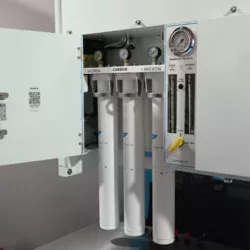
Deionisation systems use specialised resins to chemically strip mineral ions from the water. Specifically, these resins swap hydrogen and hydroxyl ions for dissolved minerals like sodium, calcium, and iron.
This process happens at a molecular level. Actually, it is far more efficient than boiling hundreds of liters of water. Indeed, a high quality deionisation system can produce Type 1 ultrapure water with a resistivity of 18.2 MΩ·cm.
Consequently, this makes it the superior choice for sensitive applications like HPLC or molecular biology.
Technical Comparison Of Purification Methods
Deionized water vs distilled water systems differ significantly in their ability to target specific contaminants.
Looking at the data helps clarify which system provides the necessary compliance for your facility according to the ASTM D1193 specifications for reagent water.
| Contaminant Type | Distillation Removal | Deionisation Removal |
| Dissolved Inorganics | High | Exceptional |
| Dissolved Organics | Low | High (with Carbon) |
| Bacteria and Pyrogens | Exceptional | High (with UV/Ultrafilter) |
| Particulates | High | High |
| Energy Consumption | High | Low |
How To Choose The Right System For Your Lab
Choosing between deionized water vs distilled water is only the first step.
The real challenge?
It’s finding hardware that delivers high purity without the excessive energy costs of legacy distillers.
In reality, most lab managers waste thousands of dollars annually on electricity and maintenance for outdated distillation units.
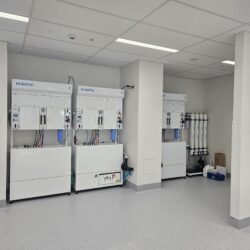
If you are ready to upgrade your facility, you need a system designed specifically for the rigours of clinical diagnostics. Actually, our engineering team has developed a range of solutions that provide the precision of deionisation with the reliability of local Australian support.
You can explore our full range of laboratory water purification systems for clinical labs to find the specific configuration for your site.
Whether you need Type 1 ultrapure water or high-volume CLRW grade supply, our systems ensure you meet NATA requirements while cutting your operational overhead by up to 40%.
Frequently Asked Questions
Is deionized water the same as distilled water?
No. While both are types of purified water, the method of production is different. Distillation uses heat to create steam, while deionisation uses ion exchange resins to remove minerals. Consequently, deionized water typically has a much higher ionic purity and higher resistivity than distilled water.
Can I use deionized water instead of distilled water in my lab?
Yes. In almost every modern clinical application, deionized water is the superior choice. Actually, it provides more consistent results for sensitive analysers. Indeed, unless your specific testing protocol explicitly requires the thermal properties of distillation, deionisation is the industry standard for high precision work.
Does deionisation remove bacteria?
Deionisation alone does not remove bacteria as effectively as distillation does. However, modern systems solve this by adding UV sterilisation and ultrafiltration modules. Therefore, a complete deionisation system actually provides a higher level of total purity including both mineral and biological contaminants.
The Final Technical Summary
The move away from distillation is driven by the need for higher precision and lower overheads.
The maintenance required for a distiller, such as descaling the heating elements, often outweighs the perceived simplicity of the technology. Therefore, deionisation remains the industry standard for labs that prioritise consistency and ROI.