Using distilled water when your body requires sterile water isn’t just a mistake; it is a fast track to life-threatening sepsis.
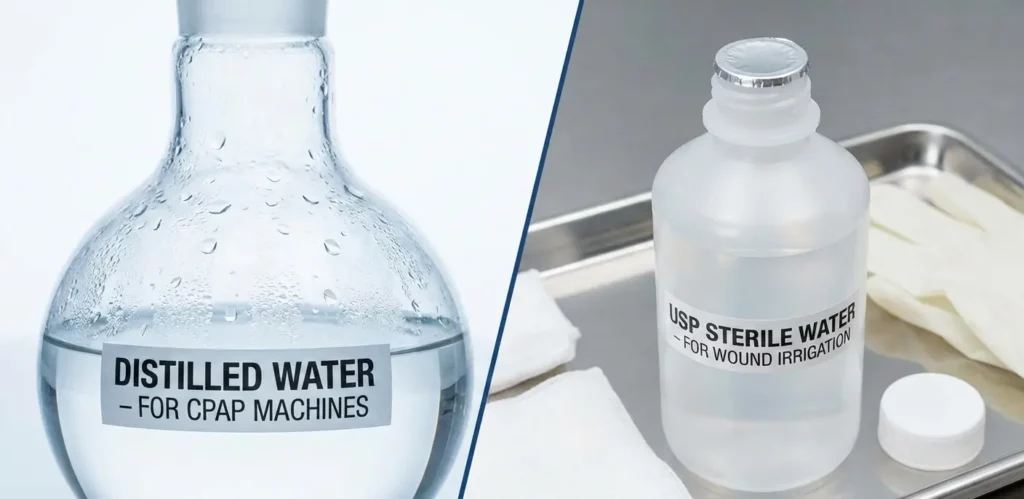
Specifically, choosing between distilled water vs sterile water depends on whether you are maintaining a CPAP machine or irrigating an open wound.
Using the right grade of water ensures your equipment stays mineral-free while your body stays pathogen-free.
But if you think these two are interchangeable because they both look clean, you are making a gamble that could cost you everything.
The Core Difference: Purity vs. Sterility
Many people assume distillation equals safety.
It does not.
Distillation is a process designed to remove minerals, chemicals, and heavy metals.
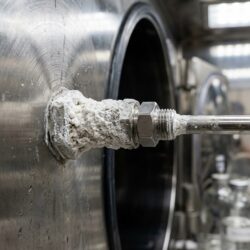
It creates a pure liquid that won’t leave crusty scales inside your steam iron or lead-acid batteries. Consequently, it is the gold standard for mechanical longevity.
Sterile water, however, meets a much higher biological standard regulated by the USP (U.S. Pharmacopeia). While distilled water might be free of minerals, it can still host bacteria if it has been sitting in a plastic jug on a grocery shelf.
Sterile water is guaranteed to be free of all microorganisms.
This is why you must never confuse the two in a clinical setting.
Understanding the science is one thing, but knowing when to apply it to your health is where the real danger lies.
Can I Use Purified Water for Medical Use?
The short answer is: it depends on the medical use in question.
If you are cleaning the external plastic casing of a thermometer, purified or distilled water is perfectly fine.
However, if the water is entering a mucous membrane or a breach in the skin, the answer is a hard no.
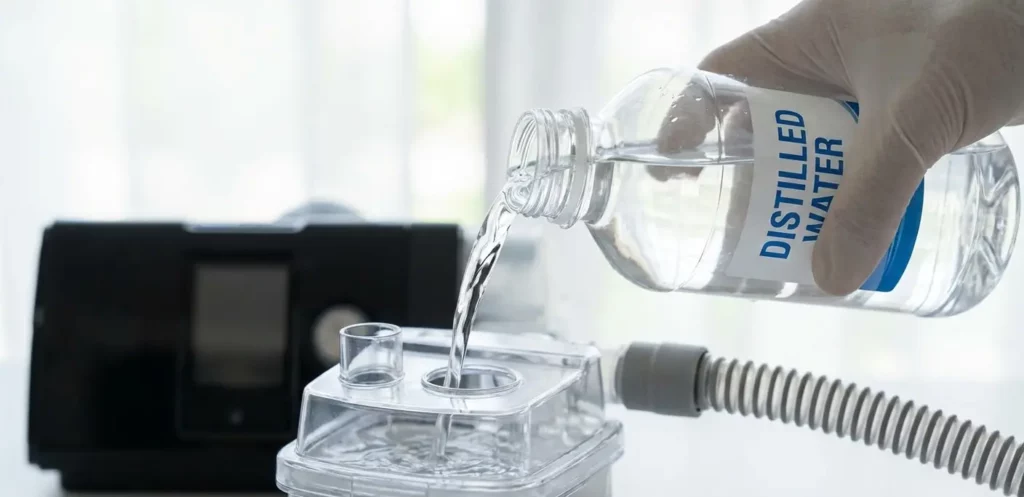
Purified water (which includes distilled, deionized, and RO water) is processed to remove chemicals. Specifically, it is great for preventing mineral buildup in CPAP humidifiers.
However, once that bottle is opened, it is no longer a controlled environment. Bacteria can begin to grow within hours. Consequently, for any application involving invasive home care, you must verify the label for a USP Sterile rating.
But even within the world of sterile water, there is a sub-division that determines if a treatment heals or harms.
Sterile Water for Irrigation vs Injection
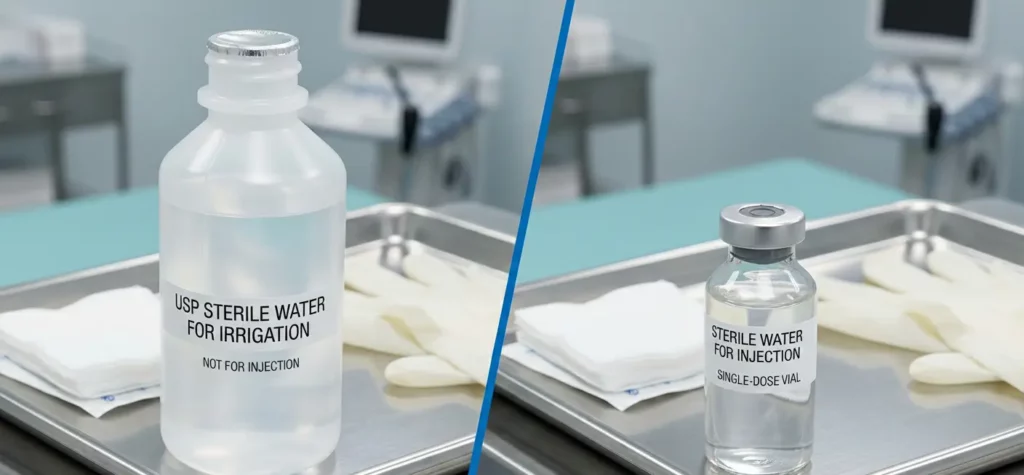
This is where technical labels save lives. Sterile Water for Irrigation and Sterile Water for Injection are both clean, but they are not the same.
Irrigation water is typically packaged in large-volume containers meant for washing out wounds or surgical sites.
It is sterile, but it is not necessarily non-pyrogenic to the same strict degree as injectable water.
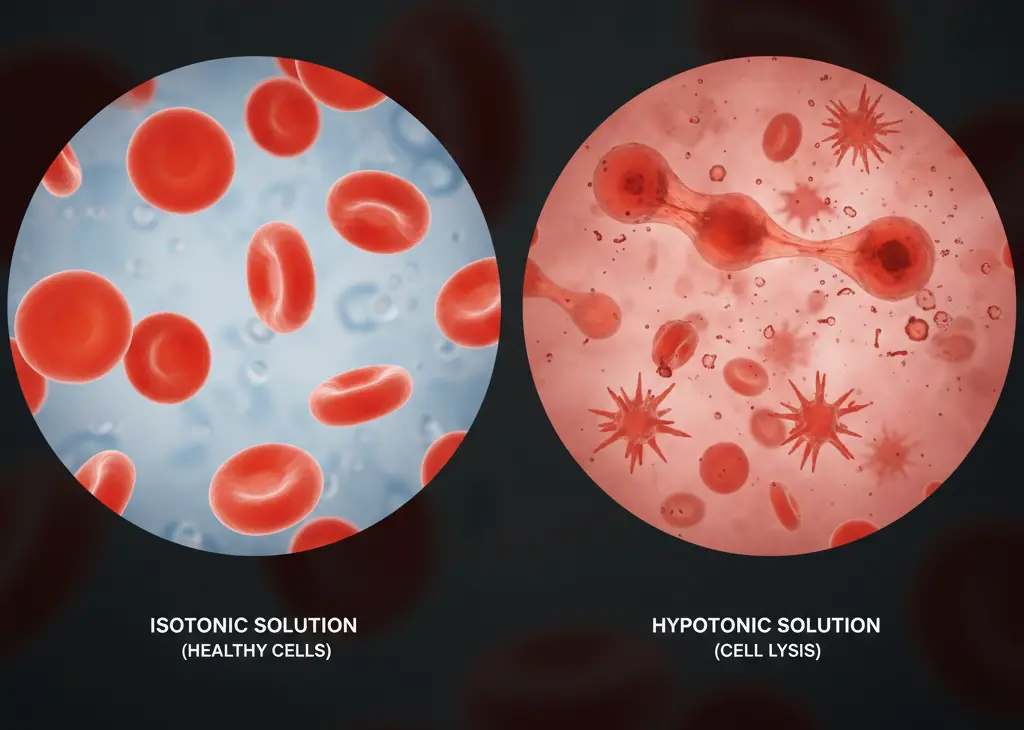
Sterile Water for Injection is specifically designed to be mixed with medications and delivered directly into the bloodstream. It must be perfectly balanced to ensure it does not cause red blood cells to burst.
Therefore, grabbing a bottle of irrigation water to dilute an IV medication is a critical medical error.
| Feature | Distilled Water | Sterile Water (Irrigation) | Sterile Water (Injection) |
| Primary Goal | Mineral Removal | Pathogen Removal | Intravenous Safety |
| Microorganisms | Possible | Zero | Zero |
| Safe for Wounds | No | Yes | Yes |
| Safe for IV | No | No | Yes |
| USP Certified | No | Yes | Yes |
The choice between these grades is not just about quality; it is about the specific path the water takes into your body.
Why Distilled Water Fails the Medical Test
You might wonder why you cannot just boil distilled water to make it sterile. While boiling kills most active bacteria, it does not always eliminate heat-resistant spores or endotoxins.
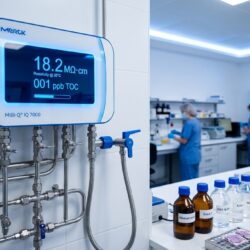
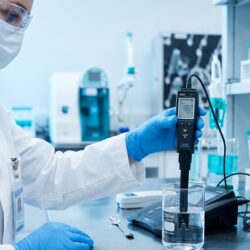
In a lab environment, we use Type 1 water for high-precision testing because even a tiny amount of organic carbon can ruin a result.
For your health, the purity of distillation does not replace the certainty of sterilization. If you use distilled water for a syringe, the lack of osmotic balance can cause haemolysis, where your cells literally explode.
Consequently, the low price of grocery store distilled water is never worth the risk of a systemic infection or cellular damage.
But wait, there is one more invisible factor you must check before you pour.
Final Verdict: Making the Right Call
When it comes to distilled water vs sterile water, you must ask one question:
“Is this water touching a machine or a human?”
If it is for your humidifier, steamer, or battery, go with distilled. It is cheaper and keeps your tech running smoothly without mineral clogs.
If the water is for a medical procedure, wound cleaning, or any form of injection, you must use USP Sterile water. You can find more details in our complete guide to medical-grade water.
Never let a $2 bottle of distilled water be the reason for a $20,000 hospital stay.