In 2026, designing a high-volume facility requires balancing centralized lab water systems with surgical point-of-use precision to ensure total compliance. You must deploy advanced monitoring, modular filtration, and risk-diversified distribution to protect your sensitive analytical assays. This strategic alignment transforms your water from a utility into a rock-solid foundation for reproducible science.
The stakes have never been higher for facility managers. One slip in your distribution logic could turn your entire multi-million dollar lab into a stagnant, bio-contaminated liability overnight.
Benefits of Centralized Lab Water Systems
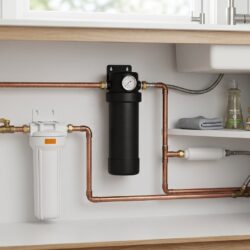
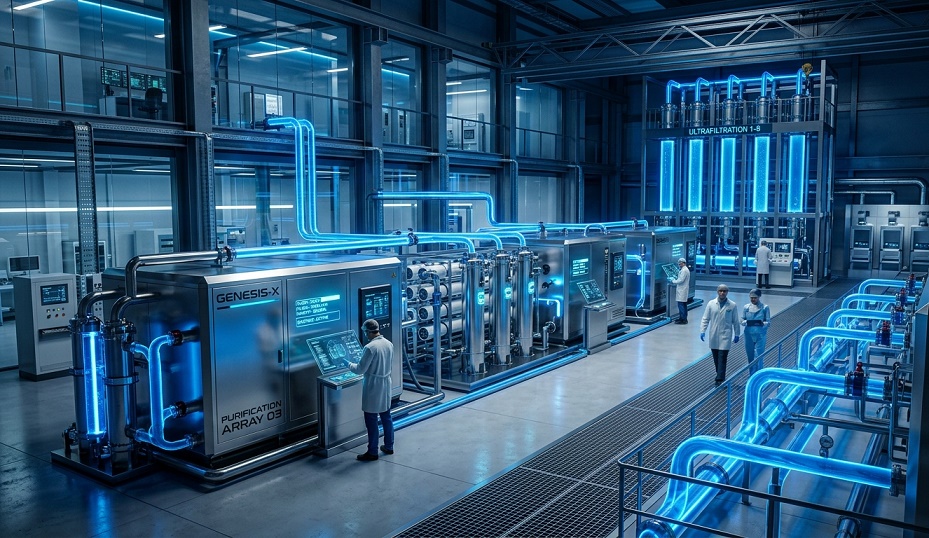
Centralized systems are the heavy lifters of the modern research facility. When you manage a high-volume lab, trying to maintain fifty individual benchtop units is a logistical nightmare that drains your budget and your team’s focus. A centralized hub allows you to consolidate pre-treatment, reverse osmosis (RO), and continuous electrodeionization (CEDI) into one powerhouse location.
This centralization slashes maintenance overhead by up to 40% compared to fragmented setups. Instead of fifty filter changes, you manage one. Instead of fifty calibration logs, you have a single, audit-ready data stream. In 2026, the shift toward sustainable “Green Lab” certifications makes these systems even more attractive. They significantly reduce wastewater by recycling reject water for non-critical applications like autoclaves or cooling loops.
Scalability and the 2026 Modular Standard
In the current landscape, the most effective centralized designs utilize modular skids. According to the International Society for Pharmaceutical Engineering ISPE, modularity allows for “plug-and-play” capacity increases without tearing out existing infrastructure.
- CAPEX Savings: Centralized infrastructure can reduce initial piping and distribution costs by 75% compared to multi-point setups in sprawling facilities.
- Energy Efficiency: Modern 2026 units utilize AI-driven variable speed pumps that match flow to real-time demand, cutting energy consumption by 30%.
- Water Recovery: Advanced RO systems now achieve recovery rates of 80% or higher, meeting the strict sustainability mandates of the current year.
But as efficient as a central hub is, it creates a massive “all your eggs in one basket” problem that could paralyze your workflow.
The Case for Point of Use Water Purification
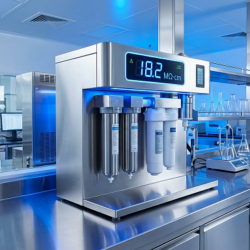
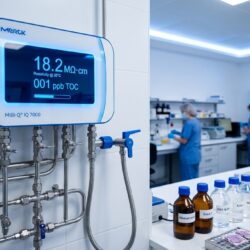
While the central system handles the bulk, point of use water purification is your precision instrument. Critical applications like HPLC, ICP-MS, and molecular biology require Type I ultrapure water with a resistivity of 18.2 MΩ.cm and TOC levels below 5 ppb. Pumping this level of purity through hundreds of feet of piping is a recipe for degradation.
Solving the 2026 Analytical Sensitivity Challenge
Modern analytical instruments in 2026 have detection limits so low that even trace leaching from high-grade piping can throw off your results. Point-of-use (POU) polishers act as the final gatekeeper, removing any contaminants that managed to slip through the distribution loop or leach from the pipes themselves.
| Feature | Centralized Distribution | Point-of-Use (POU) |
|---|---|---|
| Water Grade | Type 2 or Type 3 | Type 1 (Ultrapure) |
| Best For | Glassware, Autoclaves, Feedwater | HPLC, Genomics, Cell Culture |
| Risk Profile | Distribution Biofilms | Cartridge Exhaustion |
| Standard | ASTM D1193 Type II | CLSI GP40-A4 |
Real-Time TOC Monitoring and 2026 Compliance
ASTM and CLSI standards now emphasize real-time monitoring over periodic sampling. Modern POU units like those discussed by Veolia provide TOC readings every 2 to 3 seconds. This ensures that the moment a cartridge fails, the system stops dispensing. You aren’t just guessing if your water is pure; you have a digital twin proving it.
- Customizable Alarms: Set thresholds between 3-50 ppb based on your specific assay sensitivity.
- Automated Logging: Generate 21 CFR Part 11 compliant reports directly from the dispenser.
- Ultra-Low Endotoxin: Integrated ultrafiltration at the point of use ensures your water is pyrogen-free for sensitive cell work.
Relying solely on these polishers is expensive, but relying solely on a central line is a risk you cannot afford to take.
Mitigating Water Distribution Risk
The biggest threat to your facility isn’t a pump failure; it’s the invisible growth of biofilms inside your distribution loop. In a centralized setup, a single contamination event can spread through your entire building like a virus. Mitigating this requires a “Hybrid Distribution” strategy that combines smart loop design with localized redundancies.
Eliminating Single Points of Failure
To protect your uptime, you must design for “Continuous Recirculation.” Stagnant water is a breeding ground for bacteria. Your 2026 strategy should include a distribution loop that maintains a minimum flow velocity of 1-2 meters per second. This shear force prevents bacteria from adhering to the pipe walls.
The 2026 Redundancy Checklist
If your central plant goes down, your lab shouldn’t stop. Implement these three layers of protection:
- Dual Pre-treatment Trains: Never rely on a single carbon filter or softener. Parallel trains allow for maintenance without downtime.
- UV Disinfection at the Return: Install 254nm UV lamps on the return line of your loop to kill any planktonic bacteria before they reach the storage tank.
- Emergency POU Buffers: Use best water for autoclaves and other critical equipment by keeping small, stand-alone purification units as backup in high-stakes departments.
When you master the balance between centralized efficiency and point-of-use security, you create an unbreakable infrastructure.