
Mastering ISO 14644-1 lab standards requires a rigorous mix of laser particle counters, HEPA filtration mapping, and strict gowning discipline. As a facility leader, your reputation hinges on your ability to maintain invisible boundaries against microscopic invaders. This guide transforms complex regulatory jargon into a foolproof roadmap for total environmental mastery.
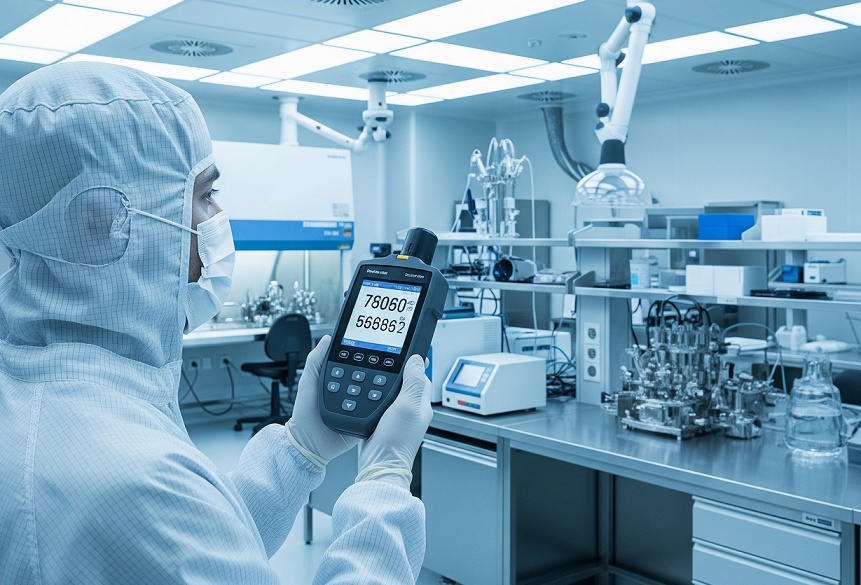
You think your lab is clean because the floors shine and the staff wears coats. But in the world of high-stakes precision, what you cannot see is exactly what will shut you down. One microscopic slip-up is all it takes; and the clock is already ticking.
Decoding Cleanroom Particle Classes
The heart of the ISO 14644-1 standard is the classification table. This table dictates the maximum allowable concentration of particles per cubic meter of air. If you are operating a life sciences lab or a semiconductor floor, you are likely dancing between ISO Class 5 and ISO Class 8.
The ISO 5 vs. ISO 8 Threshold
Understanding the scale is non-negotiable. An ISO Class 5 environment allows only 3,520 particles of 0.5 microns per cubic meter. Compare that to ISO Class 8, which permits a staggering 3,520,000 particles.
- ISO Class 8: The baseline for many medical device secondary packaging areas.
- ISO Class 5: High-frequency air changes (240 to 480 per hour) and unidirectional airflow.
- ISO Class 7: Common for pharmacy compounding; requires 30 to 60 air changes per hour.
| ISO Class | Particle Size (≥0.5 µm) | Air Changes Per Hour | Typical Application |
|---|---|---|---|
| ISO 5 | 3,520 | 240 – 480 | Aseptic Filling |
| ISO 6 | 35,200 | 150 – 240 | Microelectronics |
| ISO 7 | 352,000 | 30 – 60 | Medical Device |
| ISO 8 | 3,520,000 | 10 – 20 | Support Areas |
Navigating these numbers is just the entry fee for the game. But once you know the “what,” you have to prove the “how” to the auditors waiting at your door.
Achieving Lab Facility Compliance
Compliance is not a one-time event; it is a permanent state of readiness. To survive an audit against ISO 14644-1 lab standards, your documentation must be as clean as your air. You need a Master Validation Plan that covers installation, operation, and performance qualification.
Mandatory Certification Documentation
The International Society for Pharmaceutical Engineering emphasizes that data integrity is the backbone of compliance. You must maintain a paper trail that includes:
- Pressure Differential Logs: Evidence that your cleanroom is maintaining a positive pressure relative to “dirty” zones.
- Calibration Certificates: For every sensor and particle counter used in the facility.
- HEPA Leak Test Reports: Proof that your filters are seated correctly and free of pinhole leaks.
The 2026 Shift in Regulatory Focus
Regulatory bodies like the FDA are moving toward “Continuous Monitoring” rather than periodic checks. This means static annual reports are no longer enough to guarantee your facility’s safety status.
Without a bulletproof paper trail, your sophisticated air handlers are just expensive fans. However, even the best documentation cannot save you if your staff is inadvertently sabotaging your air quality every morning.
Implementing Contamination Control Protocols
Humans are the primary source of contamination in any controlled environment. We shed millions of skin cells and thousands of particles every minute just by existing. Your protocols must be designed to contain the human element.
Daily Habits for Particle Limit Maintenance
Effective contamination control is about “doing” the small things correctly every single time. Start with these non-negotiable habits:
- Slow Movement: Rapid movements create turbulence that kicks up floor particles into the work zone.
- Proper Gowning Sequence: Always gown from the top down (hood, then coverall, then boots) to prevent falling particles from landing on clean garments.
- Surface Sanitization: Use validated wipes from specialists like Purific to ensure you are not just spreading dust around.
Managing Ingress and Egress
The “Air-Lock” is your best friend. Ensure that interlocks are functioning and that staff understands the “one door at a time” rule. Breaking this vacuum, even for a second, can spike your particle counts into a failing grade.
It sounds simple, but consistency is where most managers fail. But even with perfect staff behavior, you might still be ignoring the biggest threat hiding in plain sight.
Air Purity Standards vs. Surface Cleanliness
Most lab managers obsess over their HEPA filters. While air purity is the focus of ISO 14644-1, it is only half the battle. Gravity is a constant; eventually, those airborne particles will land.
Why Air Filters Alone Fail
High-efficiency particulate air (HEPA) filters are designed to capture 99.97% of particles at 0.3 microns. However, they cannot reach under benches, inside equipment, or into “dead zones” where air becomes stagnant.
- Stagnant Pockets: Areas where the airflow velocity drops below 0.30 meters per second.
- Surface Accumulation: Heavy particles that fall out of the airstream before they can be exhausted.
- Cross-Contamination: Particles transferred via gloves or tools from one surface to another.
You must balance your air purity with a robust surface cleaning schedule. If you only look up at the ceiling, you are missing the crisis brewing on your countertops.
Using Particle Counter Data
Data is useless if it just sits in a folder. To truly master ISO 14644-1 lab standards, you must use your particle counter as a diagnostic tool, not just a “pass/fail” sensor. Modern 2026 sensors provide real-time trending that can predict a filter failure weeks before it happens.
Turning Monitoring into Actionable Maintenance
When you see a spike in 0.5-micron particles at 10:00 AM every Tuesday, that is not a random event. It is a data point.
- Trend Analysis: Compare particle spikes against your staff schedule or equipment cycles.
- Proactive Filter Replacement: If your pressure differential is creeping up while particle counts remain steady, your filters are loading and nearing the end of their life.
- Root Cause Analysis: Use handheld counters to “sniff” out leaks in door seals or window gaskets.
The World Health Organization provides extensive guidelines on how environmental monitoring supports product safety. Use these benchmarks to justify your maintenance budget to upper management.
Data tells the story of your lab’s health, but only if you are willing to listen. If you ignore the trends today, you will be forced to deal with the shutdown tomorrow.
Leave a Reply
You must be logged in to post a comment.