
The secret to a 15 year equipment lifespan involves using high purity deionized water to maintain Autoclave water quality and prevent catastrophic scale build up. You must stop viewing water as a simple utility; in the world of high pressure sterilization, it is a chemically reactive component that either preserves or destroys your internal sensors.
Failing to treat your feed water is a guaranteed path to phantom alarms, compromised cycles, and a repair bill that could have bought you a second unit.
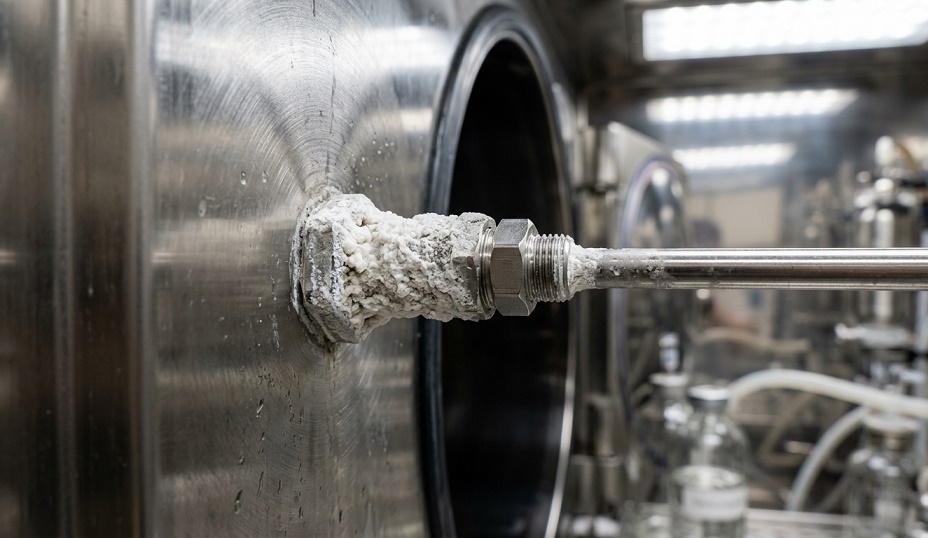
In the next five minutes, you will discover the invisible chemistry eating your machine from the inside out and how to stop it. If you ignore these 2026 standards, you aren’t just risking a breakdown; you’re risking a total laboratory shutdown.
How Scale Build Up Causes Sensor Failure
If you think a little white crust on your heating elements is “normal,” you are flirting with a systemic failure. Mineral deposits are not just an aesthetic issue; they are a thermal and electrical insulator that blinds your machine’s brain.
When medical-grade water standards aren’t met, the resulting chemistry creates a physical barrier between the sensor and the environment it is supposed to monitor.
The Chemistry of Mineral Deposits in 2026
Under the high heat (121°C) and pressure (15 PSI) of a standard cycle, dissolved calcium and magnesium carbonates undergo a phase change.
They precipitate out of the water, forming a rock hard layer known as “limescale.” This layer has a devastating effect on two specific types of sensors:
- Thermocouples: Limescale acts as an insulator. It slows the heat transfer to the temperature probe, causing the autoclave to “overcook” the load because the sensor thinks the chamber hasn’t reached the target temperature yet.
- Conductivity Probes: These sensors rely on the water’s ability to conduct a small electrical current to detect levels. Scale is non-conductive, meaning the sensor will report a “Low Water” error even when the chamber is full.
Updated 2026 Purity Thresholds
According to the latest 2026 ANSI/AAMI ST108 standards, the requirements for steam sterilization water have become significantly more stringent to accommodate modern, high sensitivity electronics.
| Contaminant | 2026 Critical Threshold | Impact on Sterilizer |
|---|---|---|
| Hardness (CaCO3) | < 1 mg/L | Heavy scale formation on heaters |
| Silicate (SiO2) | < 0.1 mg/L | Irreversible “blueing” of stainless steel |
| Chloride | < 0.05 mg/L | Pitting and stress corrosion cracking |
| Conductivity | < 5 μS/cm | Sensor erraticism and false alarms |
Maintaining these levels is the only way to ensure your steam sterilizer maintenance remains predictable rather than reactive. But even with the right water, your pipes might be hiding a dirty secret that’s about to boil over.
Preventative Steam Sterilizer Maintenance
You cannot “set and forget” your water system. Even the best Reverse Osmosis (RO) or Deionization (DI) systems can suffer from “breakthrough,” where exhausted resin beds suddenly dump a concentrated load of minerals into your autoclave.
Effective scale build up prevention requires a proactive SOP that starts at the tap and ends at the drain.
Critical Line Flushing and Feed Water SOPs
Stagnant water in supply lines is a breeding ground for biofilm and concentrated mineral pockets. You should implement a daily “first-run flush” to clear the lines before the first sterilization cycle of the day. This is especially vital for units that sit idle over the weekend.
- Monthly: Perform a professional water quality test to ensure your DI cartridges are still performing at sub-1 μS/cm levels.
- Daily: Check the chamber drain strainer for debris and wipe the gasket with a lint free cloth.
- Weekly: Flush the steam generator (if applicable) to remove “sludge” that accumulates at the bottom of the tank.
Managing Autoclave Consumables
Don’t go cheap on your filters. Your [autoclave consumables] are the frontline soldiers in this war. High quality 0.2 micron filters and high capacity ion exchange resins are significantly cheaper than a $3,000 sensor replacement and the associated three days of lost productivity.
You might think you’re saving money by stretching your filter life an extra month, but the math tells a much darker story about your bottom line.
Calculating the Cost of Hard Water Damage
Let’s talk numbers, because that is where the “hard water” reality really hits home. A standard benchtop autoclave in 2026 costs between $15,000 and $25,000, while larger floor models can exceed $60,000.
When you factor in hard water damage, you aren’t just looking at a repair bill; you’re looking at the total cost of ownership (TCO).
Repair Bills vs. Purification Costs
The average cost of a “scale-related” service call in 2026 sits around $1,200 for labor and travel, plus parts. If your heating elements are fouled, that’s another $800. Totaling $2,000 for one mistake.
In contrast, a high-end DI water system lease or maintenance plan typically costs less than $150 per month.
- Water Treatment: ~$1,800 per year.
- Emergency Repair: $2,000+ per incident.
- Productivity Loss: $1,500 – $5,000 per day (depending on lab volume).
The ROI of “Purity First”
By investing in the right [autoclave water quality], you extend the mean time between failures (MTBF) by over 40%. This isn’t just about avoiding a headache; it is about protecting the integrity of your sterilization cycles and ensuring every load meets the ISO 17665-1:2024 requirements for sterility assurance.
Your machine is screaming for better water every time a sensor flickers or a cycle runs long. Are you going to listen now, or wait until the screen goes black?
Leave a Reply
You must be logged in to post a comment.