
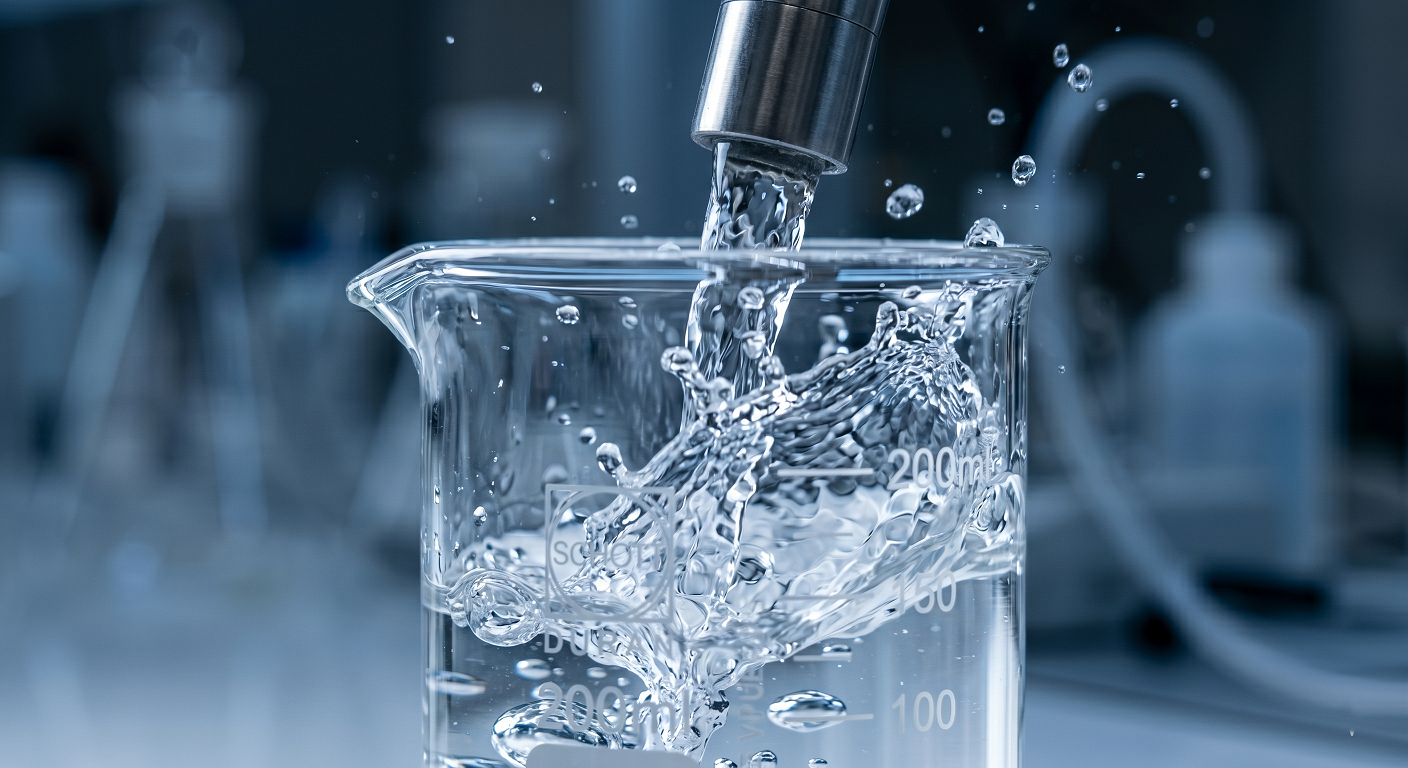
If you have started looking into purification options, the question of what is deionized water probably came up. Most households give little thought to water quality until something goes wrong. A water heater fails early, glassware comes out of the dishwasher with a white film, or a news story about a city’s contaminated supply makes the question feel suddenly urgent.
Most explanations run either too technical or too vague to be useful.
- What deionized water actually is.
- How it differs from distilled water.
- Where it genuinely belongs.
- Whether it has any place in your home.
By the end, you will have enough information to decide whether it is relevant to your situation.
Why the Water You Use at Home Actually Matters
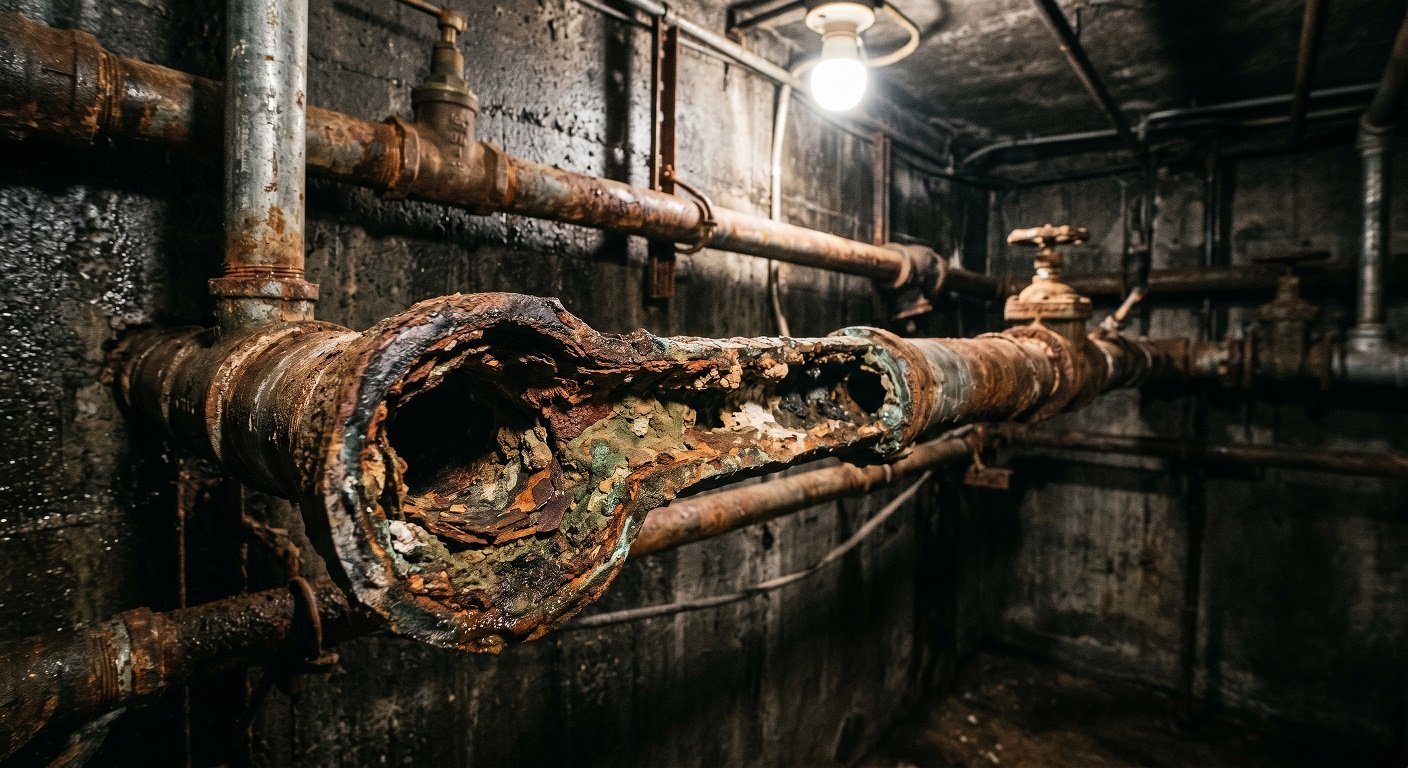
In April 2014, Flint, Michigan switched its municipal supply to the Flint River. Officials did not apply corrosion inhibitors to the new source.
Within months, lead was leaching from aging pipes into homes, exposing an estimated 100,000 residents to elevated lead levels.
When Water Source Decisions Have Real Consequences
Between 6,000 and 12,000 children showed elevated blood lead levels in subsequent testing. Legionella bacteria, spread through water systems when chlorine drops, killed 12 people in Genesee County in a linked outbreak.
Residents noticed almost immediately that the water smelled, looked brownish or greenish, and caused rashes in some households.
Flint is an extreme case, and most municipal water in the United States meets federal safety standards without incident. The crisis illustrated something relevant to every household: water source and treatment decisions have real consequences.
Safety and quality are not the same evaluation.
Where Tap Water Minerals Come From
Tap water picks up dissolved ions by moving through limestone, chalk, gypsum, and other mineral-bearing rock. Calcium, magnesium, sodium, potassium, chloride, sulfate, and trace minerals including iron and manganese are common passengers.
The specific mix depends on the geology of the region and the treatment steps the utility applies before water reaches your tap.
Some of those additions are intentional. Fluoride is added at treatment facilities to reduce tooth decay, and phosphates coat the interior of aging pipes to prevent lead from leaching into the supply. That second measure became a fixed part of municipal practice in the years following Flint.
The EPA classifies Total Dissolved Solids (TDS) as a Secondary Drinking Water Standard. TDS measures all dissolved substances in water, expressed in milligrams per liter. That designation means the 500 mg/L recommended limit governs taste and aesthetics, not direct health risk.
A USDA study found only four minerals exceeded 1% of daily intake values per liter, across 144 U.S. locations. At normal levels, calcium and magnesium in tap water are not a health hazard.
The concern they raise is mechanical, not toxicological.
What Hard Water Actually Costs at Home
Where mineral content does cause measurable harm is in appliances. Calcium and magnesium ions form calcium carbonate scale, commonly called limescale, when water is heated or evaporates. This deposits on heating elements, inside pipes, and across dishwasher interiors.
Heating elements coated in that residue must work harder to transfer heat, accelerating wear. Some appliance manufacturers void warranties when hard water damage is identified as the cause of failure.
In high-hardness regions, the financial toll is concrete. South Florida tap water typically runs 13 to 22 grains per gallon (GPG), well above the national average of roughly 7 GPG. At the high end, water heaters fail at six to eight years rather than the expected ten to twelve.
Across energy, early appliance replacement, and cleaning products, estimated annual costs run $800 to $1,400 in the most affected areas. That pattern raises a natural question: what actually happens when those ions are removed?
What Is Deionized Water: How Ion Exchange Removes Minerals
So what is deionized water, exactly? The short answer is water that has had nearly all of its dissolved mineral ions removed through a process called ion exchange. The longer answer explains why that matters, what the process can and cannot do, and why the word “pure” in this context means something more specific than most people assume.
How the Ion Exchange Mechanism Actually Works
Ions are electrically charged atoms or molecules dissolved in water. Cations carry a positive charge: calcium (Ca²⁺), magnesium (Mg²⁺), sodium (Na⁺), and iron (Fe²⁺) are the most common in tap water.
Anions carry a negative charge: chloride (Cl⁻), sulfate (SO₄²⁻), bicarbonate (HCO₃⁻), and nitrate (NO₃⁻) are typical examples. These are the ions responsible for scale, taste differences, and the hardness measurements on your water report.
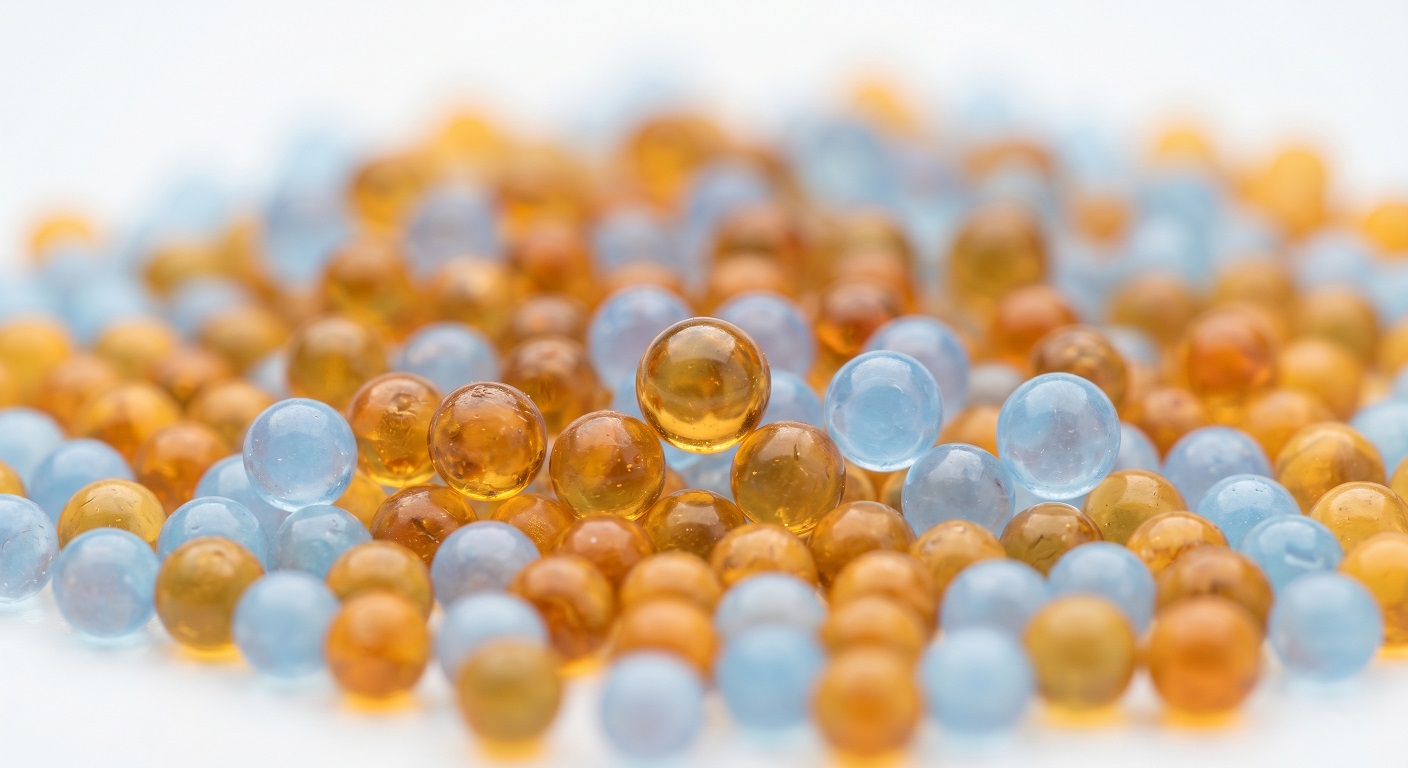
Ion exchange removes them by passing water through resin beads, which are small porous plastic beads with charged functional groups on their surface. Cation resin beads carry a negative charge, so they attract and hold positively charged ions.
Anion resin beads carry a positive charge and capture negatively charged ions. Each captured ion is replaced with something far simpler.
Cation resins swap captured mineral cations for hydrogen ions (H⁺). Anion resins swap captured mineral anions for hydroxyl ions (OH⁻). The released hydrogen and hydroxyl ions then combine to form water (H₂O). What leaves the resin bed is water that has traded its dissolved mineral load for additional water molecules.
What the Process Produces and What It’s Called
The practical result is water with very low electrical conductivity. Ions are the primary carriers of electrical charge in water, so removing them drops conductivity to near zero.
High-purity deionized water can reach a resistivity of 18.2 megaohm-centimeters (MΩ·cm) at 25°C, the theoretical maximum for pure water. That is why DI water is the standard in semiconductor manufacturing and lab settings, where trace ionic contamination disrupts results.
That 18.2 MΩ·cm benchmark is also the specification for Type 1 water, the highest purity grade used in laboratory and pharmaceutical settings.
Deionized water is also called demineralized water, particularly on product labels and filter specifications. The two terms describe the same product: DI water emphasizes the ion removal process, while demineralized water emphasizes the mineral removal result. You will encounter both, often interchangeably, depending on the industry or manufacturer.
What Deionization Leaves Behind
Here is where a common misconception needs direct correction.
Ion exchange targets charged particles only. Uncharged contaminants pass through the resin unaffected: bacteria, viruses, organic compounds such as pesticides, and dissolved gases all pass through without being captured. In stagnant storage, bacteria can actively grow in DI water because they do not require mineral ions for survival.
When DI water is exposed to air, it absorbs carbon dioxide (CO₂), which forms carbonic acid (H₂CO₃) and lowers the pH slightly below 7. Stored DI water becomes mildly acidic over time. This contributes to its corrosive character in piping systems and is one reason laboratory-grade DI water is typically used fresh rather than stored in open containers.
Where the Process Has Limits
Not all ions are captured with equal efficiency. Resin beads have a stronger affinity for some ions than others: calcium binds more tightly to cation resin than sodium does, for example.
As a resin bed approaches exhaustion, the ions it holds less strongly begin to slip through first. This selectivity is why monitoring output conductivity matters in precision applications: a rising reading signals the resin needs regeneration before purity falls outside acceptable limits.
Silica presents a particular challenge. Depending on pH, silica can exist partly as an uncharged molecule (silicic acid) rather than as a charged ion. Standard anion resins handle it poorly in that form.
Full silica removal requires strong base anion (SBA) resins, used in boiler feedwater treatment and some semiconductor applications.
A TDS meter, which measures total dissolved solids in parts per million (ppm), is the practical tool most people use to verify DI water quality. Properly produced DI water reads at or near 0 ppm.
Readings above zero indicate residual ions, from partial resin exhaustion or unusually high source water concentrations. Electrical conductivity tells the same story: near-zero conductivity confirms near-zero ion content.
How to Choose the Right System Configuration
Three main system configurations produce DI water, each reaching a different purity level.
| System | How It Works | Typical Use |
|---|---|---|
| Co-current | Water and regenerant flow in the same direction | General industrial applications |
| Counter-current | Regenerant flows opposite to water flow | Applications requiring slightly higher purity |
| Mixed-bed | Both resin types combined in a single tank | Semiconductor fabrication and pharmaceutical water systems |
Once the resin beads are fully loaded with captured ions, they stop producing DI water and must be regenerated. Cation resins are flushed with hydrochloric acid (HCl) to restore their hydrogen ions. Anion resins are flushed with sodium hydroxide (NaOH) to restore their hydroxyl ions.
An alternative worth knowing is electrodeionization (EDI), which replaces chemical regeneration entirely. EDI uses direct current electricity alongside ion exchange membranes and resin to remove ions continuously, without the need for acid or caustic flushes.
It does not remove pathogens or organic compounds on its own and is typically installed downstream of reverse osmosis as a polishing step. In facilities where chemical handling is impractical or where continuous high-purity output is required, EDI is the preferred approach.
Deionized Water vs. Distilled Water: Key Differences
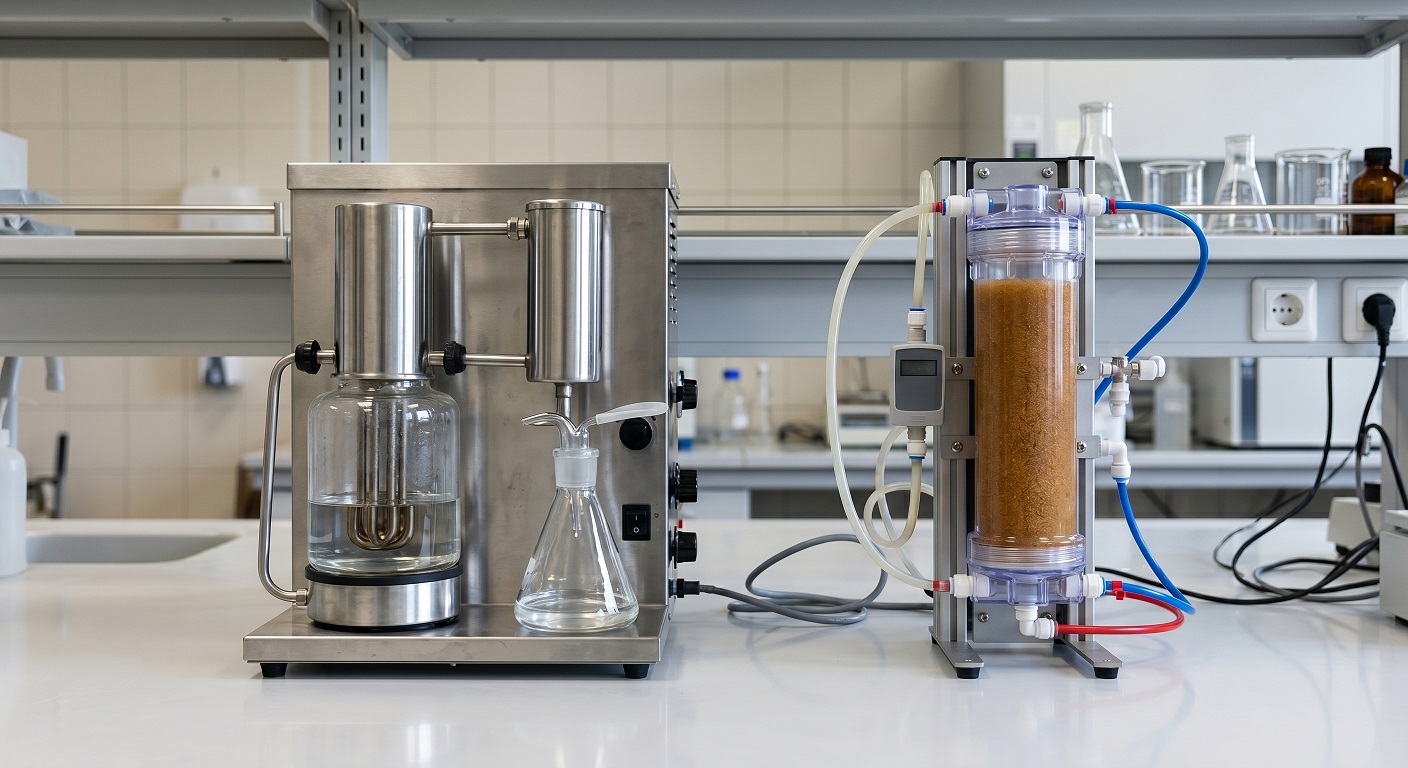
Most people encounter these two terms and assume they describe slightly different versions of the same thing. They do not. Deionized and distilled water can reach similar mineral levels, but the processes that produce them are fundamentally different, and those differences determine what each type is actually safe to use for.
How Each Type Is Produced
Deionized water is produced by passing water through ion exchange resins, as described in the previous section. No heat is required. The process targets charged ions specifically and leaves everything else, including bacteria, viruses, and organic compounds, untouched.
Distilled water is produced by heating water to its boiling point (100°C / 212°F), converting it to steam, and routing it through a cooling condenser where it recondenses into liquid. Contaminants that do not vaporize, including dissolved mineral salts, bacteria, viruses, and most organic compounds, remain behind in the boiling chamber.
That phase change (the physical transition from liquid to gas and back) is the key to understanding why distillation removes a broader range of contaminants than ion exchange. Deionization is a chemical process: ions are swapped out on resin beads. Distillation is a physical process: water molecules separate from non-volatile contaminants by changing state.
Which Is Safer for Home Appliances
One practical consequence of that difference matters for most households. Distilled water is sterile, meaning free of viable microorganisms, as a result of the boiling process. Deionized water is not.
If a pathogen was present in the source water before deionization, it remains present in the output. This distinction is what drives most appliance recommendations for distilled water for humidifiers, steam irons, and CPAP machines.
| Appliance | Recommended Water | Key Reason |
|---|---|---|
| CPAP machines | Distilled | Prevents scale in the humidifier chamber and eliminates bacterial aerosolization into the airway |
| Steam irons | Distilled (generally) | Eliminates mineral scale; DI water is permitted by some manufacturers but not all. Check the appliance manual. |
| Humidifiers | Distilled | Removes both mineral and microbial variables; DI water leaves microbial risk open when output is aerosolized |
Where Deionized Water Has the Advantage
Automotive cooling systems sit at the other end of that spectrum. High-performance coolant loops require ion-free water to prevent scale and galvanic corrosion in metal components.
Sterility is not a consideration for a sealed cooling circuit, so the energy cost and slower production rate of distillation offer no advantage there. Deionized water suits radiators and coolant loops well, typically mixed with antifreeze per the manufacturer’s ratio.
Worth noting as a counterpoint: distillation has its own limitations. Volatile organic compounds (VOCs) are carbon-based chemicals with low boiling points; some co-evaporate with water during distillation and appear in the distillate. Deionized water from ion exchange does not carry this risk, though it does not remove VOCs by other means.
There is also a common question about which type is “purer.” The answer depends on what you are measuring.
Ultra-pure DI water reaches 18.2 MΩ·cm resistivity, higher than most home or commercial distillation achieves. By ion removal alone, DI water wins. Biological purity tells a different story: distilled water is the safer product.
What Most Homeowners Should Actually Buy
Neither type is universally superior, and the right choice depends entirely on what the application requires. For most homeowners, the practical recommendation is clear.
Distilled water is the more practical choice for household appliances that specify purified water.
It is widely available, inexpensive, and removes both mineral and biological contamination. Deionized water is more relevant in precision and industrial settings where ion removal at sub-parts-per-billion levels is required and sterility is handled separately.
What Deionized Water Is Actually Used For
These industries share one defining trait: their processes are sensitive to ionic contamination at levels most instruments cannot detect. Trace minerals in a pharmaceutical solution can alter a chemical reaction. These are not edge cases. They are the routine operating conditions that make DI water the baseline requirement.
Why Precision Industries Cannot Use Tap Water
In precision manufacturing and laboratory environments, ion-free water is not a preference. It is a process requirement. Even sub-parts-per-billion contamination can shift analytical readings, corrupt fabrication steps, or invalidate an entire test run. Analytical techniques such as chromatography (separation and identification of chemical compounds), spectroscopy (analysis of how compounds interact with light), and electrochemistry (measurement of electrical properties in solutions) are particularly sensitive to ionic interference.
| Application | What DI Water Does | Why It Matters |
|---|---|---|
| Electronics and semiconductors | Rinses silicon wafers and circuit boards between fabrication steps | Trace contamination at the 18.2 MΩ·cm standard causes short circuits or device defects |
| Pharmaceutical manufacturing | Prepares drug solutions, vaccines, and reagents; cleans production equipment | Prevents mineral interference with active ingredients; ensures purity testing reflects the product |
| Laboratory analysis | Serves as solvent, buffer base, and glassware rinse | Stray ions shift readings or mask target signals in chromatography, spectroscopy, and electrochemistry |
| Power generation | Feeds steam boilers and turbines | Prevents scale and corrosion that reduce efficiency; high operating temperatures accelerate mineral precipitation |
Where DI Water Makes a Difference at Home
Outside industrial settings, deionized water has a narrower but genuine role in several home and hobbyist applications. The common thread is mineral control, though the precision required is far less extreme than in semiconductor or pharmaceutical contexts. Aquarium hobbyists in particular rely on reverse osmosis (RO) water, a membrane-based process that removes dissolved solids, or DI water as a starting base, then add mineral mixes to support coral calcification, the process by which corals build their calcium carbonate skeletons.
Car Detailing
With no dissolved solids to deposit, DI water leaves no spots or mineral streaks when it evaporates. Detailers and enthusiast car washers use it as a final rinse on paint, glass, and chrome.
Aquarium Keeping
Reef and planted-tank hobbyists start with DI water and add mineral mixes to reach a target chemistry. Using tap water introduces unpredictable mineral levels that interfere with coral calcification and fish health.
Cosmetics and Personal Care Manufacturing
Lotions, creams, and shampoos use DI water as an ion-free base to prevent mineral interference with active ingredients. This is standard practice for commercial formulation rather than a niche application.
Food and Beverage Production
Breweries, soft drink manufacturers, and food processors use DI water to ensure consistent product formulation. Mineral variation in source water would otherwise alter taste and chemical behavior between batches.
Where DI Water Offers No Real Advantage
For the average homeowner, deionized water offers no meaningful advantage over distilled or filtered water in the tasks most people consider it for. Humidifiers, steam irons, and CPAP machines are better served by distilled water, which is also sterile.
General household cleaning does not require ion-free water. Filtered tap water performs just as well for counters, floors, and windows. The cost of sourcing DI water for cleaning is not justified.
What separates a genuine DI water application from an unnecessary one is ion-sensitive precision. Any process sensitive to ionic interference at sub-milligram-per-liter levels is a genuine DI water application. Most household tasks do not approach that threshold.
Is Deionized Water Safe to Drink?
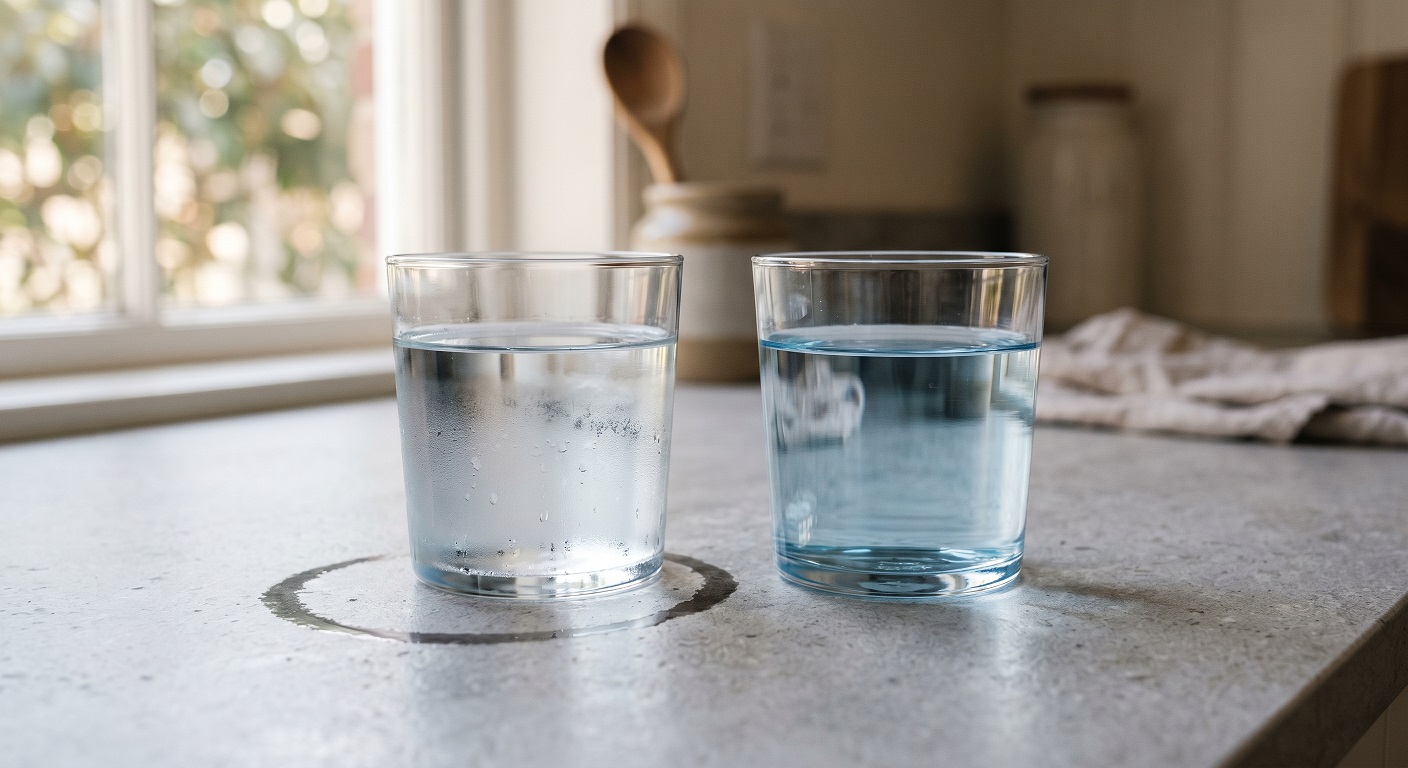
The direct answer is this: deionized water is not poisonous, and occasional consumption by a healthy adult is unlikely to cause immediate harm. It is not, however, the optimal choice as a primary drinking source, and the reasons why are specific enough to be worth understanding before you decide whether it belongs in your household.
Three Reasons Not to Drink It Regularly
The concern is not acute toxicity. It is what happens over time when water that lacks dissolved minerals becomes your main source of hydration. That distinction matters because it changes the risk profile entirely: the question is not whether DI water will harm you today, but whether relying on it long-term creates conditions your body has to compensate for.
Three limitations make deionized water a poor choice as a primary drinking source. Each is worth understanding separately.
No beneficial minerals
Ion exchange removes calcium and magnesium along with every other dissolved mineral ion. These are not incidental trace elements. Calcium supports bone density and muscle function; magnesium is involved in hundreds of enzymatic reactions (biological chemical processes). Drinking water is not the only source of either, but it contributes to daily intake in ways that matter when diet is also marginally low in these minerals.
Altered taste
Water without dissolved minerals tastes noticeably different from mineral-containing water. Most people describe it as flat, hollow, or slightly metallic. This is not a safety concern on its own, but it may reduce how much water a person drinks, which has its own hydration consequences over time.
Potential pathogens
Deionization does not remove bacteria or viruses. Safety depends entirely on the quality of the source water and any pre-treatment steps applied before deionization. In stagnant storage, bacterial growth in DI water is a documented risk, not a theoretical one.
How Ion-Free Water Behaves in the Body
Beyond those three limitations, there is a fourth property of deionized water that deserves specific attention. Without dissolved ions of its own, DI water has a stronger chemical drive to dissolve minerals from whatever it contacts.
In the body, this means it can draw minerals from saliva, mucosal tissues, and the surfaces of teeth. Some researchers note a mild tingling when highly pure water contacts the tongue, reflecting this solvent behavior.
This solvent character is well-documented in piping systems: DI water corrodes metal pipes, stainless fittings, and plastic storage tanks. Whether this produces a clinically meaningful effect on healthy adults from occasional consumption is debated. The identified risk scenario is long-term, high-volume consumption as the primary water source, not an incidental glass.
What the WHO Evidence Actually Shows
The World Health Organization has addressed this directly. Its 2004 report examined health consequences of long-term demineralized water consumption across deionization, reverse osmosis, and desalination.
For drinking water, the WHO recommends minimum TDS of 150 to 300 mg/L. Minimum calcium is set at 20 mg/L and minimum magnesium at 10 mg/L. Deionized water meets none of those minimums.
Deionized water meets none of those minimums.
The epidemiological evidence cited in WHO documentation is worth summarising. People drinking water low in calcium and magnesium showed higher cardiovascular death rates than those drinking mineral-containing water. Regular consumption of low-mineral water was associated with higher fracture risk in children and lower bone density in adults.
In pregnant women, low-mineral water intake was linked to higher risk of premature birth and low birth weight. Studies found mineral losses from food of up to 60% when cooking in demineralized water and discarding the liquid. Using DI water for cooking too means mineral losses compound: the food sheds minerals along with the water.
The Practical Recommendation
Fluoride is an anion and is removed by ion exchange along with every other charged ion. Municipal fluoridation in the United States targets 0.7 mg/L, a level the CDC links to reduced tooth decay. Drinking DI water as a primary source eliminates that protective exposure entirely.
In 1993, the German Society for Nutrition issued the same warning as the WHO through a separate evidence review. Two independent bodies reaching the same conclusion from the same literature gives the caution weight beyond any single-source position.
For drinking, the practical recommendation is clear. Choose tap water, filtered tap water, or mineral water as your primary source. Deionized water is best reserved for ion-sensitive applications: precision manufacturing, laboratory work, and car detailing.
An occasional glass of DI water is not a health emergency. Building your hydration around it, however, is not a trade worth making.
Use Deionized Water Where It Belongs
Deionized water is a precisely defined product: water with nearly all dissolved mineral ions removed through ion exchange. It is not the same as distilled water, not completely pure, and not a healthier drinking option.
For the applications it was designed for, it is genuinely useful. Most household tasks do not require it.
If your work involves electronics, laboratory analysis, or car detailing, DI water is the right tool. For humidifiers, CPAP machines, or steam irons, distilled water is the safer choice. Drinking water is a different matter: tap water or filtered tap water serves you better in every measurable way.
The WHO position is clear: deionized water belongs in your workshop or laboratory, not in your glass. That is, in the end, a straightforward distinction.
Leave a Reply
You must be logged in to post a comment.