
When analyzer performance drifts and calibration results look inexplicably off, water quality is rarely the first suspect. Clinical laboratory water is a reagent, not a utility.
Contaminants at concentrations too low to detect visually can suppress enzyme activity, inflate fluorescence signals, or clog the narrow-bore manifolds inside modern analyzers.
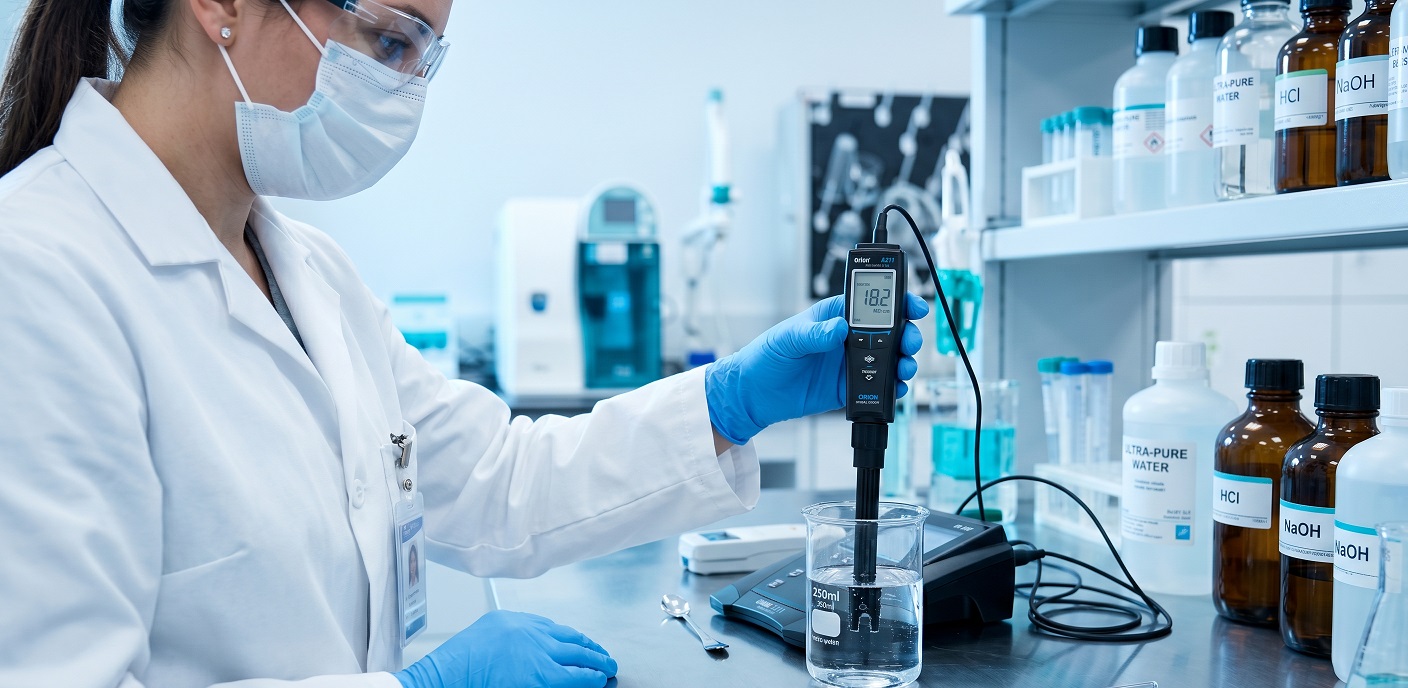
CLSI addresses this through GP40, a guideline defining water purity requirements across four parameters: resistivity, organic carbon, bacterial count, and particulate filtration.
Knowing what each targets, and why, is the foundation of a compliant water program.
What CLSI Requires for Clinical Laboratory Water
Most labs running automated chemistry or immunology analyzers must use water meeting a specific minimum standard. CLRW is defined in CLSI GP40, the guideline covering reagent water preparation and testing in medical laboratories.
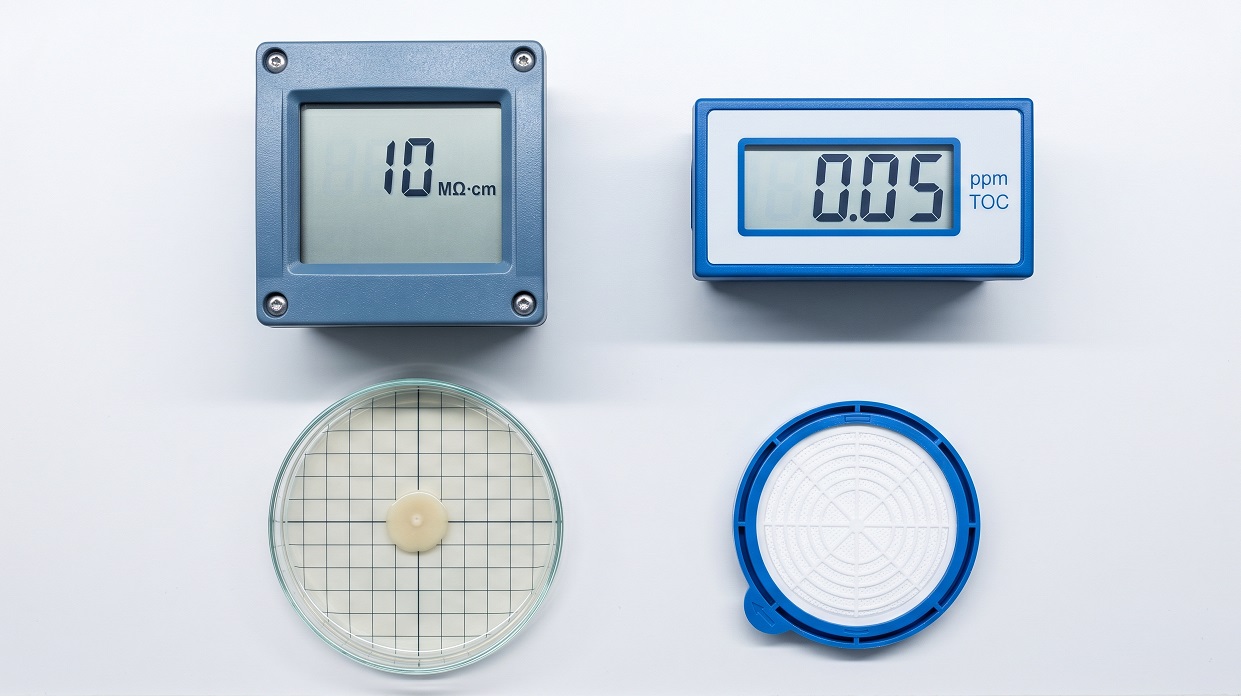
GP40 sets four measurable parameters that define acceptable water quality for clinical laboratory use.
The Four Parameters Your Lab Must Meet
The first parameter is resistivity, a measure of how strongly water resists electrical current. Higher resistivity means fewer dissolved ions.
For reference, tap water typically measures around 0.05 MΩ·cm, making CLRW-grade water roughly 200 times more ionically pure. At lower resistivity, dissolved ions can interfere directly with enzyme-based assay chemistry.
| Parameter | Unit | CLRW Specification | What It Measures |
|---|---|---|---|
| Resistivity | MΩ·cm at 25°C | >10 MΩ·cm | How strongly water resists electrical current; higher value means fewer dissolved ions |
| Total organic carbon (TOC) | ppb (parts per billion) | <500 ppb | Concentration of dissolved organic compounds; equivalent to one drop of contamination in roughly 500 litres |
| Bacterial count | CFU/mL (colony-forming units per millilitre) | <10 CFU/mL | Count of viable bacteria present in one millilitre of a water sample |
| Particulate filtration | µm (micrometres) | 0.2 µm or finer | Removes particles and bacteria above the filter pore size before water reaches the instrument |
Prior to the 2006 revision of GP40, reducing organic contamination was recommended but not controlled by a mandatory limit. Adding TOC as a required parameter was the most consequential change that revision introduced.
Organics can also enter the system through biofilm or component leaching, not only through incoming feed water.
When Manufacturer Specs Override CLRW
These four parameters collectively define the CLRW specifications that most accredited clinical laboratories must meet. Instrument manufacturers may, however, specify requirements stricter than the CLRW baseline for their particular analyzers.
GP40 is explicit: confirm the required water grade with each instrument manufacturer before commissioning a system. Where that requirement is more demanding, it governs.
Treating CLRW as a universal ceiling rather than a floor is a common and consequential misreading of the standard.
How the 2006 Revision Changed the Framework
Understanding the current framework also requires knowing what it replaced. That revision retired the Type I, Type II, and Type III designations that many laboratories had long relied on.
Those categories grouped water by purity level without linking specifications to clinical testing requirements. CLSI replaced them with CLRW, SRW, and Instrument Feed Water, purity types tied directly to clinical assay requirements.
CLRW covers the same applications as former Type I and Type II water for most purposes.
Labs still referencing Type I or Type II in procedures or procurement documents are using a superseded framework. The practical impact is limited for routine testing, since CLRW covers the same applications.
Where those designations persist in legacy SOPs or manufacturer documentation, checking them against the current GP40 parameters confirms ongoing compliance. The 2024 revision updated monitoring guidance and added SRW requirements for molecular biology.
Why Each Parameter Exists
Key takeaways
- Dissolved ions suppress enzyme activity in enzymology and enzyme immunoassay at resistivity below 10 MΩ·cm.
- Organic compounds at concentrations as low as 500 ppb can generate false background signals in fluorescence-based immunoassays.
- Bacteria, biofilm, and particulates can all obstruct analyzer components and introduce systematic measurement error.
The four CLRW parameters are not arbitrary thresholds. Each one targets a contaminant class that causes a documented problem at the assay or equipment level.
Understanding the mechanism behind each limit makes the standard easier to apply and defend.
How Ions and Organics Compromise Assay Results
Resistivity controls for dissolved ions, which include calcium, magnesium, sodium, and chloride from the feed water supply. These ions can bind to enzyme active sites during assay preparation, altering enzyme shape and suppressing activity.
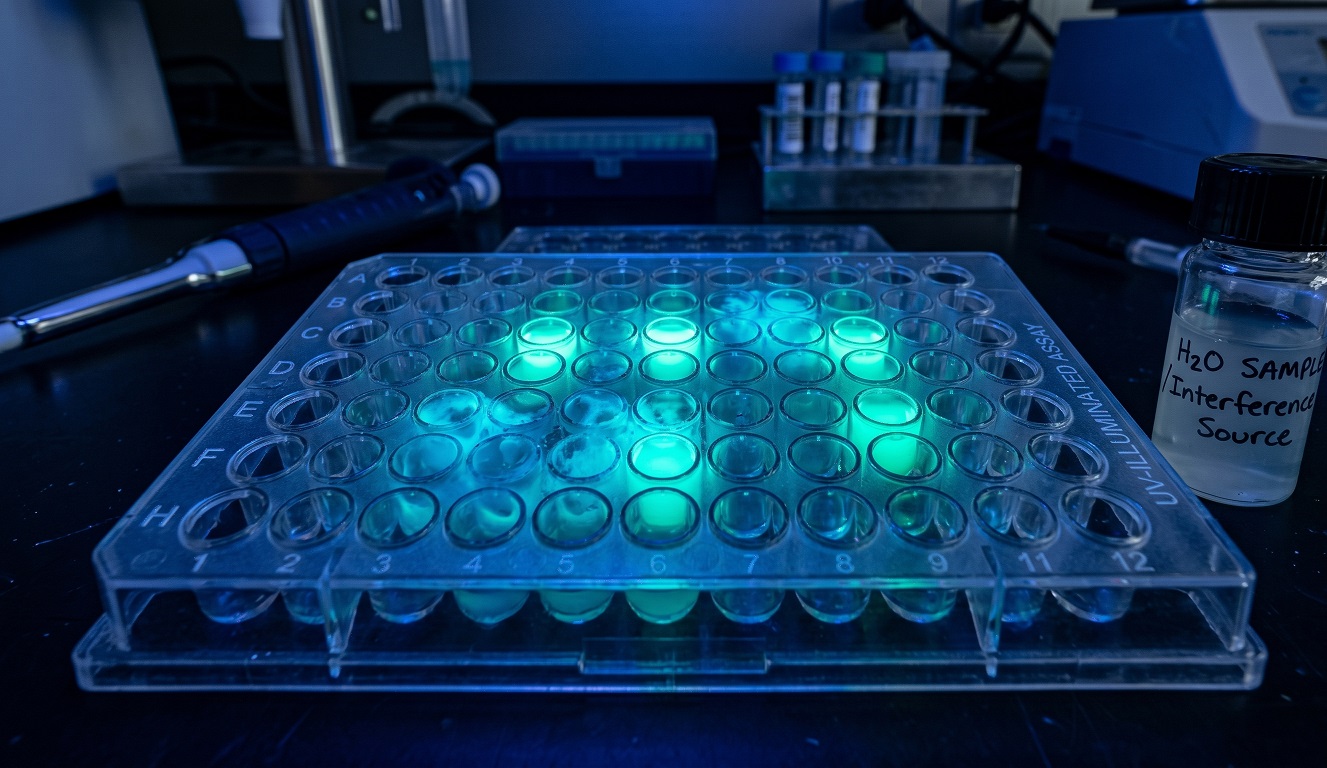
Both enzymology and enzyme immunoassay depend on tightly controlled ionic conditions at active sites, making them the assay types most directly affected.
The CLRW threshold of greater than 10 MΩ·cm restricts ionic impurities to parts-per-billion levels. Tap water typically measures around 0.05 MΩ·cm, placing CLRW-grade water at roughly 200 times greater ionic purity.
TOC controls for organic contamination. Organic compounds, including polyaromatic and heterocyclic molecules (ring-based structures that can fluoresce), can emit at wavelengths that overlap fluorescent detection antibodies used in immunoassays.
When those compounds are present in the water, they produce background signals that inflate the reported analyte concentration. Fluorescence-based immunoassays suffer most directly, as the detection method cannot distinguish organic background from the target signal.
For context: 500 ppb is roughly equivalent to one grain of sugar dissolved in an Olympic-sized pool. That is a very small amount of organic material, yet it is enough to affect sensitive fluorescence detection.
What Bacterial Contamination Does to Your Analyzer
Bacterial count controls for microbial contamination and its downstream consequences. Their by-products include endotoxins (lipopolysaccharide compounds released by bacteria that interfere with assay chemistries) and bacterial alkaline phosphatase.
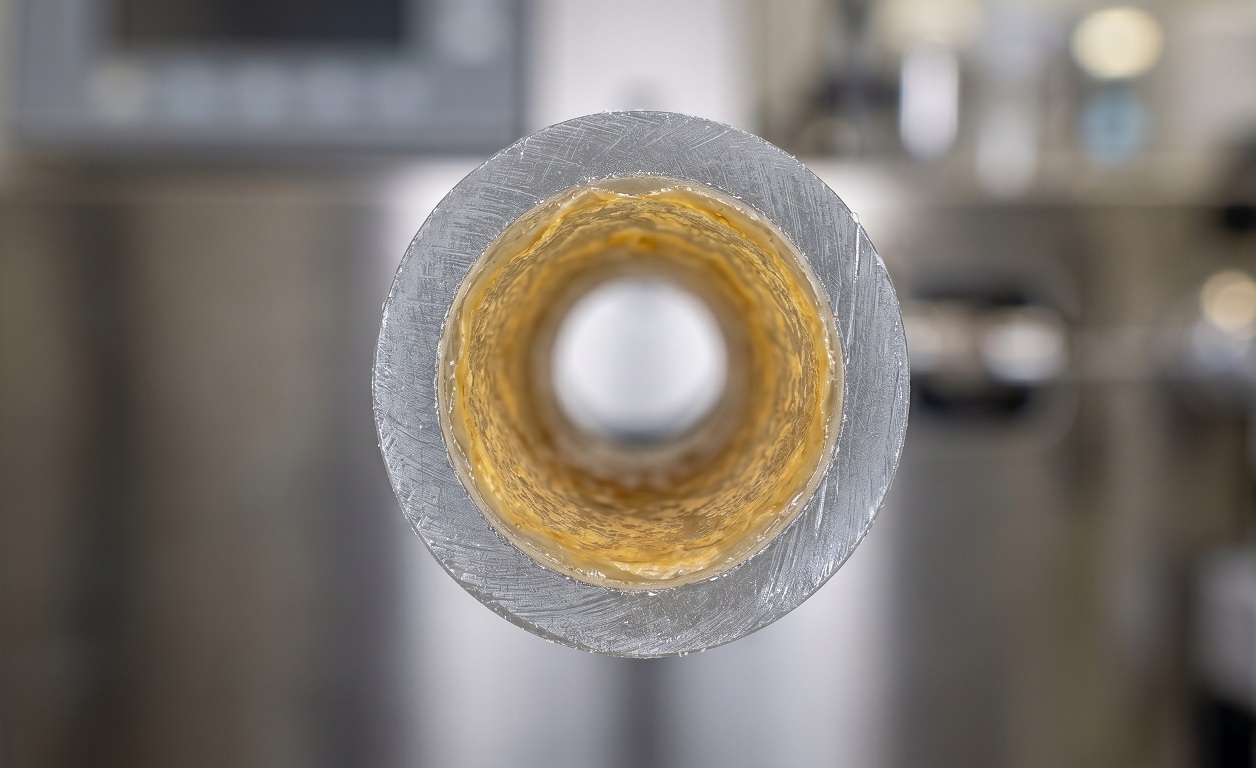
That enzyme can mimic detection labels in certain immunoassays, producing false elevated results.
Biofilm (a structured bacterial matrix that colonises water line surfaces) can narrow or occlude sample handling manifolds and analyzer tubing. Once established, it is a persistent source of bacteria and by-products that routine water changes will not clear.
Particle deposits from biofilm on flow cell walls alter spectroscopic path length (the distance light travels through a measurement cell), introducing systematic error into photometric measurements. Drifting calibrations and high reagent blanks can signal bacterial contamination at levels that affect assay performance.
Note: Once biofilm establishes in a water line, routine flushing is not sufficient to remove it. Sanitation with an approved chemical agent and re-verification of bacterial count is required before returning the system to patient testing.
Why Particles Obstruct More Than Needles
Filtration at 0.2 µm removes bacteria and inorganic particles that would otherwise obstruct sample handling needles and manifolds. Deposits of particles encourage biofilm formation, compounding the bacterial contamination risk already described.
In high-throughput systems, liquid volumes are often in the microliter range. A single obstructed needle can compromise an entire analytical run before any instrument alarm triggers.
Together, the four parameters remove every major interferent class capable of compromising assay chemistry, equipment function, or result accuracy.
Ionic impurities distort enzyme kinetics. Organics produce false optical signals. Bacteria degrade reagents and occlude fluid pathways. Particles obstruct sample handling and corrupt photometric measurements.
Each failure mode is real, documented, and preventable.
Matching Water Grade to Test Type
CLRW covers most routine clinical testing, but it is rarely the only grade a laboratory needs. Grade selection depends on which interferents compromise each test’s chemistry, not on using the highest purity available.
Where CLRW Ends and SRW Begins
Most automated chemistry, electrolyte, lipid, and enzyme immunoassay workflows fall within CLRW’s scope. Its four parameters remove ionic, organic, microbial, and particulate contamination at levels sufficient for these routine methods.
Some assay types, though, are sensitive to interferents at concentrations well below the CLRW limits.
Special Reagent Water (SRW) applies when a test requires stricter conditions than CLRW can provide. SRW has no fixed specification: the assay manufacturer determines the required parameters for each test.
Different analytical methods are sensitive to different interferents, so two SRW specifications can share almost nothing in common.
Assay Types That Need More Than CLRW
LC-MS (liquid chromatography-mass spectrometry, combining separation and mass-based detection) and trace metal analysis are the two SRW application areas most commonly encountered in clinical settings. Both require TOC below 5 to 10 ppb, far below the 500 ppb CLRW ceiling.
Residual organics at CLRW levels cause column degradation, elevated baselines, and ghost peaks in chromatographic methods. For trace metals, resistivity must reach 18.2 MΩ·cm, far above the CLRW minimum of 10 MΩ·cm.
Molecular Biology Grade water is a defined sub-type of SRW within CLSI GP40. PCR and DNA sequencing require DNase-free and RNase-free water; both enzymes degrade nucleic acid targets before analysis can proceed.
Even trace phosphate ions and organic acids within CLRW limits can inhibit thermostable polymerases (heat-stable enzymes that drive DNA amplification in PCR) and disrupt primer binding. The 2024 revision of GP40 added explicit guidance for this sub-type, reflecting its growing clinical relevance.
Tip: Before running PCR or DNA sequencing on a new water system, confirm the system produces water meeting Molecular Biology Grade requirements. Resistivity alone is not sufficient verification; nuclease and TOC testing are both required.
Instrument Feed Water and Manufacturer Responsibility
For Instrument Feed Water, CLSI places compliance responsibility with the instrument manufacturer. The manufacturer must validate the water grade required for their specific chemistries.
Your laboratory’s obligation is to use water meeting that validated specification, which may be stricter than CLRW. Assuming CLRW suffices for all analyzer feeds without checking the manufacturer’s published grade is a gap audits frequently identify.
Choosing the correct water grade is not about maximum purity across every bench. Matching purity to each test’s interferents, and confirming with the manufacturer before go-live, is more reliable than defaulting upward.
Maintaining Compliance Over Time
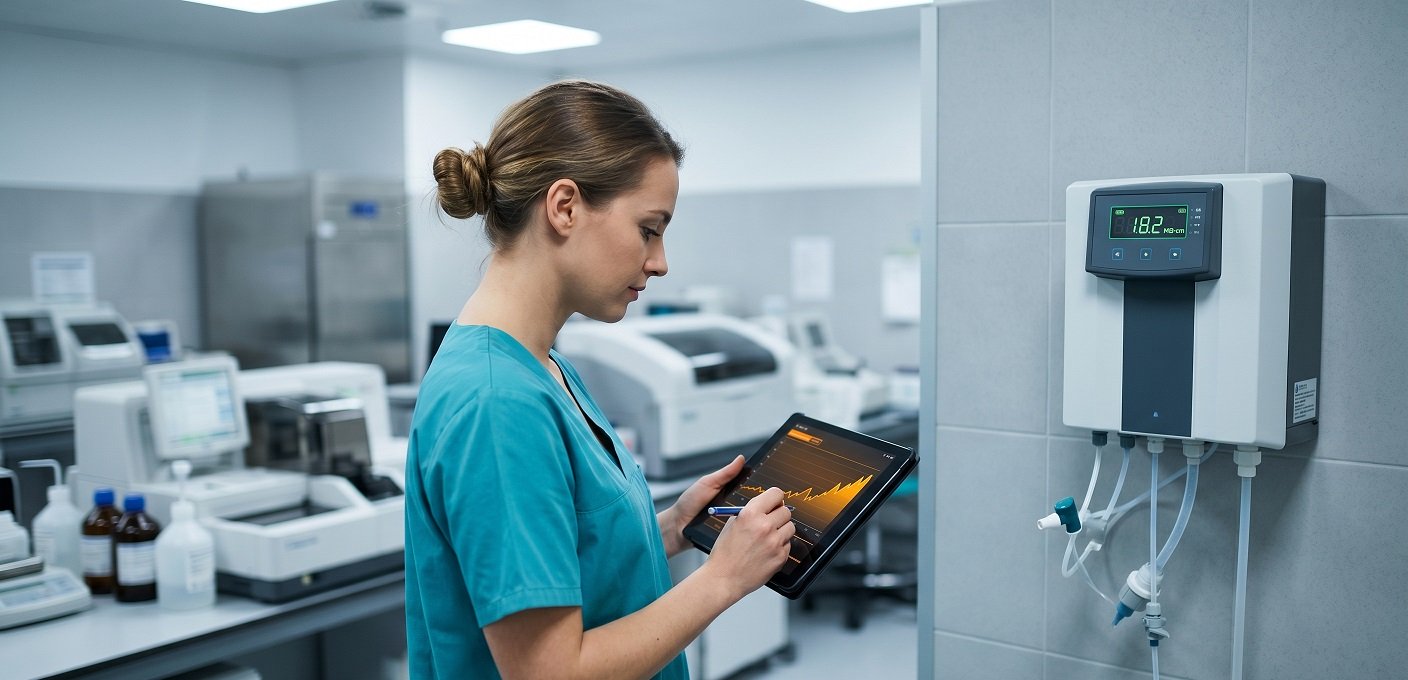
Meeting CLRW specifications at the time of installation is the starting point, not the goal. Water quality changes as system components age, as bacterial populations shift, and as resin beds approach exhaustion.
Keeping those four parameters within specification requires a program that monitors, trends, and maintains the system continuously.
What Your System Monitors and What It Misses
Resistivity is typically monitored in real time by the inline sensor built into your purification system. When resistivity drops below the CLRW threshold, the sensor triggers an alarm signalling an ionic contamination event.
Both elevated TOC and bacterial load can breach specification without affecting resistivity at all.
TOC and bacterial count require scheduled offline testing. GP40 sets no fixed frequency for either; monitoring must be frequent enough to detect system changes. Online TOC measurement is not required: sending samples to a referral laboratory for periodic TOC analysis meets the guideline.
In practice, testing frequency should be guided by your system’s historical trend data. A system with a stable performance history may test less frequently than one showing gradual upward drift.
Trending Parameters Before They Breach Limits
Trend monitoring is the mechanism GP40 recommends for proactive maintenance. Charting results over time lets directional changes become visible before any specification limit is reached.
A TOC trend rising toward 200 ppb is not yet a failure, but it signals deterioration. Sanitation or resin replacement at that point prevents the system from reaching the 500 ppb limit during patient testing.
GP40 requires formal validation before a new or modified system is used for patient testing. CLSI includes this as a non-negotiable step for accredited facilities.
It must cover installation, operational performance, and sustained output over time. Events that trigger re-validation include replacing an RO membrane type, reconfiguring the distribution loop, or changing the point-of-use filter.
Important: Replacing an RO membrane with a different model or type is a modification event that triggers re-validation under GP40. Verify the new membrane type with your system supplier before ordering a replacement.
Scheduled Maintenance That Monitoring Cannot Replace
Manufacturer maintenance schedules work alongside GP40 guidance. Regular sanitation removes biofilm from storage tanks and distribution loops. Post-sanitation bacterial testing should confirm the system is clean before patient testing resumes.
Replacing filters and resins on the manufacturer’s qualified interval prevents degradation that inline monitoring will not detect. Verify UV lamp output periodically; a lamp that appears functional may no longer deliver effective germicidal intensity.
UV lamps are commonly replaced on an annual schedule, though the manufacturer’s documented interval governs.
Review Your System
Four measurable parameters define clinical laboratory water quality, each tied to a specific interferent class with documented consequences. Understanding what each requires, and why it exists, is the foundation of a defensible water program.
The most practical next step is to pull your monitoring records and check each parameter against the GP40 specifications. While doing that, confirm whether every test type in your workflow is matched to the correct water grade.
If any parameter is missing, or if trend data shows upward drift, that is where to start.
Leave a Reply
You must be logged in to post a comment.