
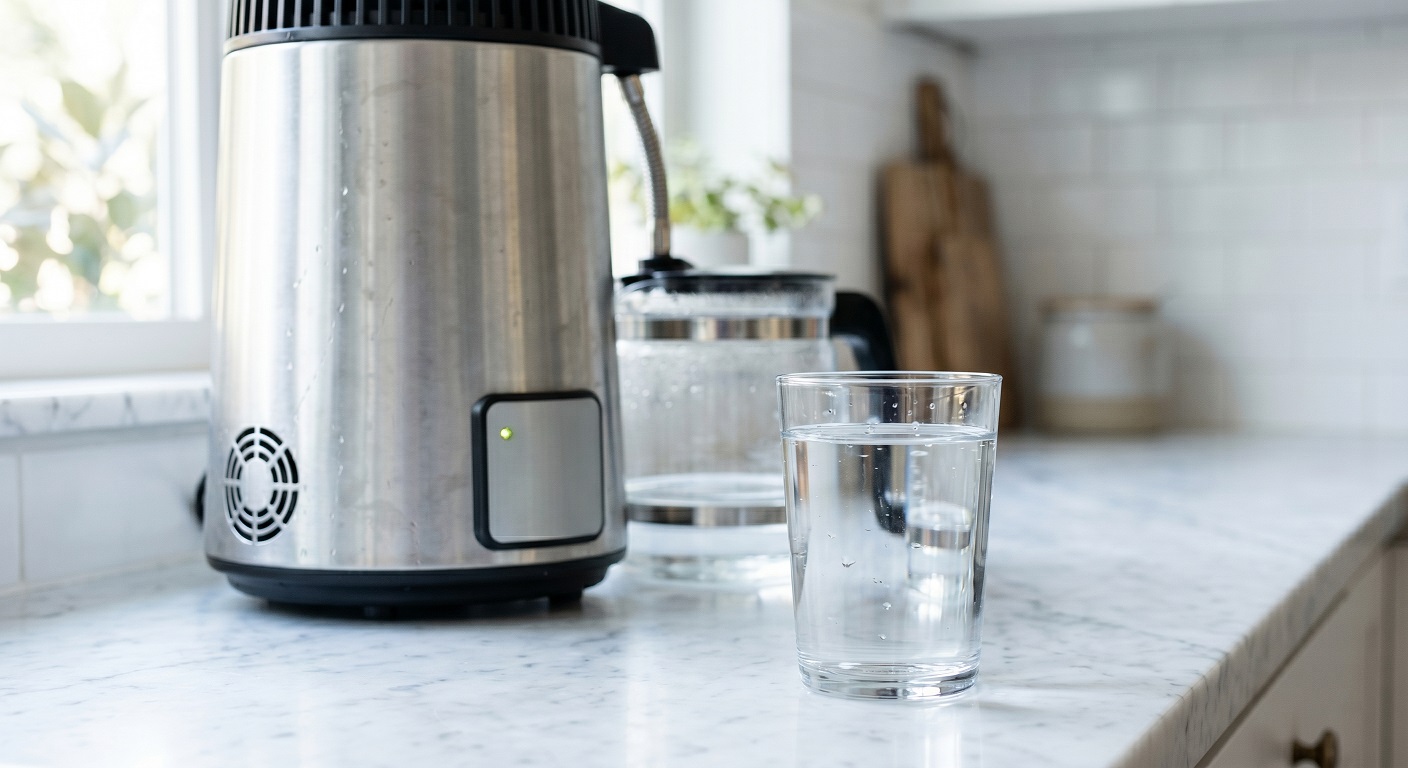
Scale builds in CPAP machine chambers when appliance instructions are ignored. White mineral residue near a humidifier running on tap water makes the same point.
- Distilled water is made by boiling water into steam and condensing it back. Nearly all minerals, bacteria, and heavy metals are removed.
- It is safe for healthy adults. It is not ideal for daily drinking as key minerals are absent.
- Most appliance manufacturers require it. Tap water minerals damage CPAP chambers, humidifiers, and steam irons.
- It is not the same as purified or filtered water. Purified water is not necessarily distilled.
- For daily drinking, choose filtered or mineral water. For appliances and lab use, distilled is correct.
What Is Distilled Water and How It Is Made
Distilled water is water that has been boiled into steam and condensed back into liquid in a separate container. Any substance that cannot vaporise at or near 100°C stays behind in the boiling chamber as residue.
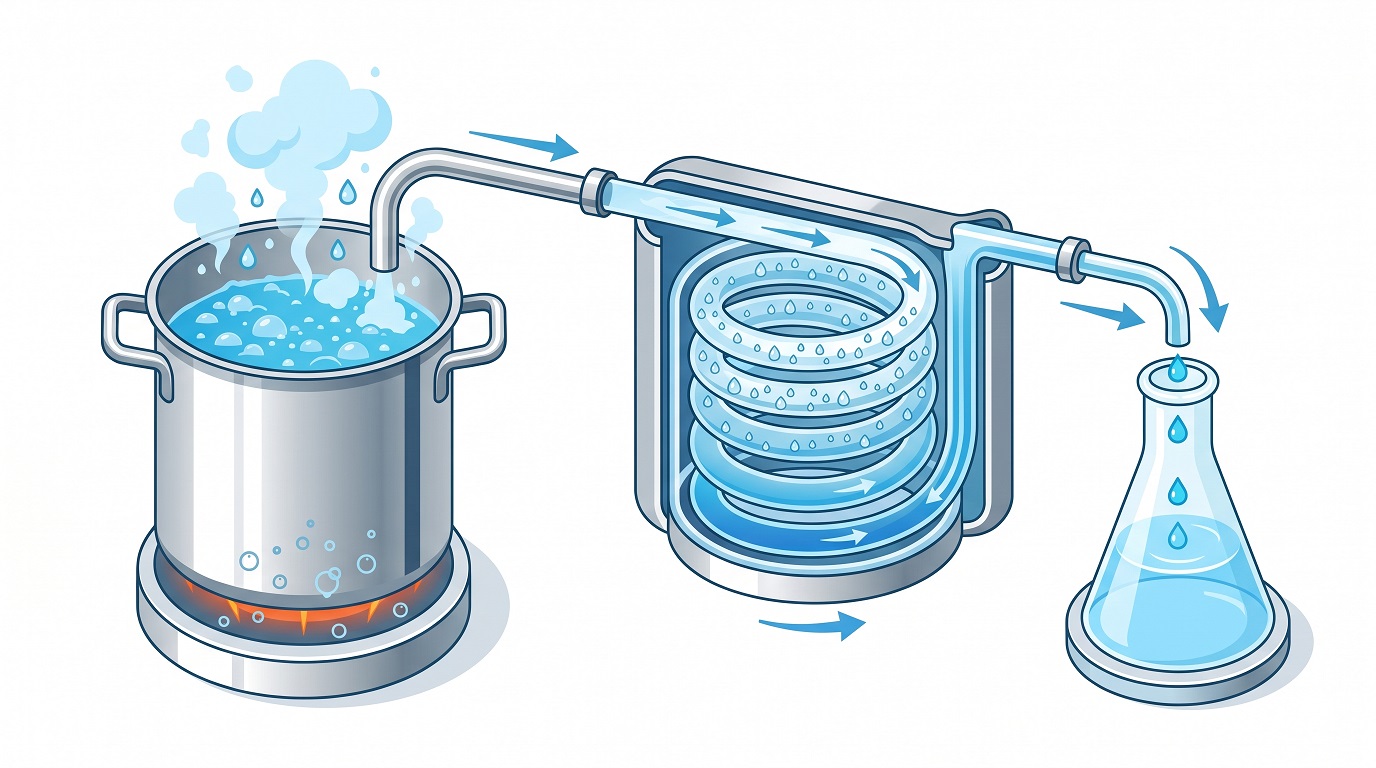
What collects in the receiving container is water separated from nearly everything that was dissolved in it.
The process mirrors the Earth’s natural water cycle in a controlled setting. Ocean water evaporates, rises, cools into clouds, and falls as rain that is relatively free of dissolved solids.
A countertop distiller replicates that sequence: collect the steam, cool it, and discard the residue.
How a Home Distiller Produces Pure Water
In a typical countertop distiller, source water heats to 100°C in a stainless steel chamber. Steam rises through a cooling corridor, reverts to liquid, and drips through an activated carbon filter.
That final filter captures VOCs, carbon-based chemicals that vaporise near boiling point, before they reach the collection container.
What Distillation Removes and What Stays
Distillation produces a dramatic drop in total dissolved solids (TDS), a measure of all substances dissolved in the water. Tap water typically contains 100 to 500 parts per million (ppm) of dissolved solids, per EPA secondary standards.
Distilled water generally measures 0.5 ppm or less.
The substances removed include calcium, magnesium, sodium, fluoride, potassium, iron, zinc, bacteria, heavy metals, and most pesticides. Microbial contaminants including viruses are eliminated through the boiling process itself, before steam even forms.
Boiling water alone does not produce the same result.
Heating alone kills pathogens but leaves all dissolved minerals behind, concentrating them as water volume reduces. Distillation collects the evaporated water in a separate container, away from what was dissolved in it.
How Distilled Water Relates to Purified
Distilled water meets the United States Pharmacopeia (USP) purified water standard, which sets TDS at or below 10 ppm. Purified is a broader category that also covers reverse osmosis and deionisation methods.
All distilled water is purified water, but purified water is not necessarily distilled.
Is Distilled Water Safe to Drink?
Distilled water is safe to drink. For healthy adults with a balanced diet, occasional to moderate consumption carries no significant risk.
Long-term reliance on it as the sole drinking source is where the picture becomes more complicated.
Which Minerals Are Missing from Distilled Water
The concern is not toxicity. It is mineral intake.
Distilled water contains no calcium, magnesium, sodium, potassium, fluoride, zinc, or iron.
Calcium and magnesium support bone density, muscle contraction, and nerve function. Sodium and potassium regulate electrolyte balance, fluid levels, and cardiovascular activity.
Fluoride protects tooth enamel; zinc supports immune function; iron carries oxygen through the blood.
What Health Authorities Say About Long-Term Consumption
A 2004 WHO (World Health Organisation) report linked consistent demineralised water consumption to increased risk of dietary mineral deficiencies. The same report noted that low-mineral water may increase urinary output, accelerating that loss.
WHO’s current drinking-water guidelines state there is insufficient evidence to make a definitive recommendation either way.
The German Society of Nutrition found that demineralised water negatively affects the body’s homeostasis mechanisms. These are the self-regulating processes that maintain stable mineral and fluid concentrations.
That assessment adds weight to the concern without resolving it into a clear prohibition.
Who Should Use Distilled Water with Caution
Certain groups face a more specific risk. Athletes losing one to two litres of sweat per hour also lose significant sodium, potassium, and magnesium.
Replacing that fluid restores hydration but not the electrolytes, minerals the body needs for nerve and muscle function.
People on already low-mineral diets, and individuals managing electrolyte-sensitive conditions, face a similar gap. Infants and young children carry the same risk, given their smaller body weight and developing physiology.
Alternating with mineral or tap water is one practical way to reduce that gap.
What the Evidence Says About Mineral Leaching
The leaching claim, that distilled water actively pulls calcium from bones or teeth, is disputed. A more accurate framing is that it absorbs minerals readily from whatever it contacts.
Evidence does not support the claim that it extracts minerals from skeletal tissue in healthy people.
The more plausible risk is passive.
Distilled water provides no replacement for the minerals the body loses through normal metabolism, sweat, and urinary output. Nothing in the water actively compensates for what the body expends.
For healthy adults who eat a varied diet, food typically compensates for the minerals absent in the water. Dairy, leafy greens, nuts, and lean meats supply calcium, magnesium, and potassium regardless of water type.
The risk is most meaningful when diet is poor in minerals and the person has elevated needs.
What Distilled Water Is Used For
Most applications that require distilled water share one underlying reason. Any dissolved mineral or contaminant in the water creates a problem the device or preparation cannot absorb.
Why Home Appliances Need Mineral-Free Water
CPAP machines (continuous positive airway pressure devices used to treat sleep apnea) require distilled water in their humidifier chambers. Calcium and magnesium deposits accumulate inside the chamber over time, reducing output and creating surfaces for bacterial growth.
Many manufacturers void the device warranty if tap water is used.
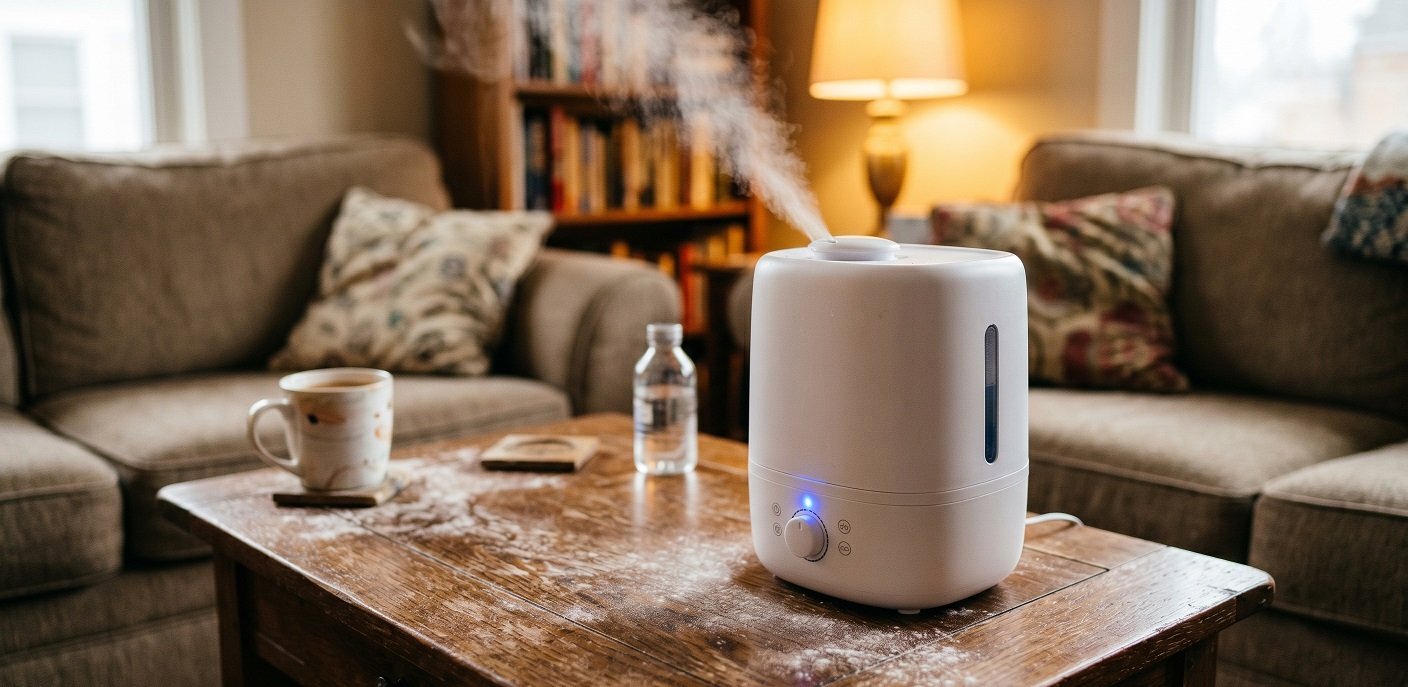
Household humidifiers face a related problem. Ultrasonic and impeller models break water into fine droplets rather than steam, carrying dissolved minerals into the air.
Hard tap water affects more than 85% of American homes. Those minerals settle on nearby surfaces as white dust, primarily calcium carbonate and magnesium deposits.
Switching to distilled water eliminates the residue at its source.
Where Contamination Risk Makes Distilled Water Essential
Medical and laboratory settings rely on distilled water to sterilise equipment and prepare solutions. Any dissolved mineral or contaminant could alter a solution’s chemical concentration, interfere with test results, or introduce infection risk.
Baby formula preparation is a context where water choice carries specific guidance. The American Dental Association recommends distilled water for parents concerned about fluoride intake in infants under six months.
Approximately 74% of the US population receives fluoridated municipal water at levels of 0.7 to 1.2 milligrams per litre. Most formula powder already contains it; combining the two sources may exceed paediatric intake guidelines.
Battery and Kitchen Uses of Distilled Water
Lead-acid batteries use an electrolyte solution, a mixture of sulfuric acid and water, that loses water during charging. Distilled water replenishes that level; tap water minerals accumulate on battery plates, reducing capacity and accelerating corrosion.
In cooling systems, it works as an antifreeze base; used alone, it can corrode metal components.
Cooking with distilled water is generally unproblematic for rice, pasta, and most preparations. Yeast breads are the main exception.
Minerals in water feed yeast and support gluten development, the protein network that gives bread its structure. Water with 100 to 150 ppm of mineral content is considered well suited to bread baking.
Distilled water, lacking those minerals, can produce dough that rises poorly and has a weaker structure.
Distilled vs. Filtered vs. Purified Water
The three terms appear on bottles, pitchers, and filter packaging, sometimes interchangeably. They are not the same thing, and the distinction matters when choosing water for a specific purpose.
Distilled
TDS below 1 ppm
None
Yes
Yes
Appliances, lab, medical
$0.08–$0.14
If drinking daily
Reverse osmosis
Best for drinking
TDS 1–25 ppm
Trace to none
Mostly yes
Yes
Drinking, cooking
$0.05–$0.20
Often included
Carbon filtered
TDS 50–200 ppm
Yes
No
Partially
Daily drinking
$0.01–$0.05
Not needed
Mineral / Spring
TDS 100–500 ppm
Yes
No
No
Daily drinking
$0.50–$2.00
Not needed
Store-bought distilled water costs $1.00–$1.50 per gallon in single-use plastic. Home production cost reflects energy use only.
When Distilled Water Is the Right Choice
Distilled water is produced by boiling and condensation. Its TDS typically falls below 1 ppm, making it the most thoroughly stripped of the three categories.
All minerals, including calcium and magnesium, are removed in the process. It suits appliances and laboratory use well.
The absence of these nutrients makes it a less practical daily drinking source.
Filtered Water and Why It Retains Minerals
Filtered water covers a broad range of methods. Activated carbon filtration targets chlorine, pesticides, and some heavy metals, while leaving naturally occurring minerals intact.
Reverse osmosis (RO) forces water through a membrane under pressure; the result is typically under 25 ppm TDS. Many RO systems include a remineralisation stage, adding calcium and magnesium back after filtration.
For daily drinking and cooking, filtered water generally represents the better balance of purity and mineral retention.
What the Purified Label Actually Tells You
Purified water is a regulatory classification, not a description of method. Any water that reduces TDS to 10 ppm or below qualifies, regardless of how that result was achieved.
Distillation meets the standard. Reverse osmosis qualifies too, as does deionisation, a process that removes dissolved mineral ions through electrically charged resin beds.
All distilled water is purified water, but the reverse is not true.
A bottle processed by reverse osmosis may contain trace minerals; one produced by distillation will contain essentially none. Consumers should check the method listed beneath “purified,” or look for an NSF International certification as independent verification.
What the Evidence Recommends for Daily Hydration
WHO guidance favours mineral-containing water for daily hydration, citing long-term mineral intake concerns. That position effectively supports filtered or mineral water over distilled as a primary drinking source.
This does not make distilled water inappropriate in all circumstances, but it clarifies which direction the evidence points.
Cost and environmental footprint vary significantly across the three categories. Home distillation uses roughly 3 to 3.2 kilowatt-hours per gallon, adding 30 to 54 cents in energy costs alone.
Store-bought distilled water costs $1.00 to $1.50 per gallon in single-use plastic jugs.
Activated carbon filtration requires far less energy and produces no wastewater. Reverse osmosis systems generate some wastewater during filtration, though modern units are more efficient than older models.
Which Type of Water Is Right for You?
The right water type depends almost entirely on what you are using it for. No single type serves every purpose well; the clearest approach is by situation rather than by product.
The Best Water Type for Daily Drinking
For daily drinking, filtered water is the practical choice for most people. Activated carbon or reverse osmosis filtration removes common tap water contaminants while retaining calcium and magnesium.
Spring or mineral water is an equally sound option for those who prefer it.
When Distilled Water Is Required, Not Optional
Appliance use is where distilled water has no practical substitute. Humidifiers, steam irons, and CPAP machines all benefit from mineral-free water.
For CPAP machines, most manufacturer guidelines require distilled water; tap water voids warranties and introduces bacterial risk.
Medical equipment follows the same logic. Any application where a contaminant could alter a result or introduce infection risk calls for it as the baseline.
Specific Guidance for Parents, Athletes, and Others
Three groups have specific reasons to think carefully about which water type they choose.
For parents preparing infant formula
If fluoride in your tap water exceeds 0.7 milligrams per litre, distilled or confirmed low-fluoride water is the appropriate choice for infants under six months. After six months, the American Academy of Pediatrics recommends switching to fluoridated water to support dental development.
For athletes and people with high sweat output
Mineral or electrolyte-supplemented water serves better than distilled. The electrolyte gap that distilled water cannot fill becomes consequential when the body is losing sodium, potassium, and magnesium through sustained physical activity.
For people managing health conditions where mineral intake matters
Consult a healthcare provider rather than rely on water type alone as a variable. Individual medical context determines what is appropriate.
Frequently Asked Questions
These are the questions that did not fit neatly into the sections above but come up consistently. Each one has a direct answer.
Can you make distilled water at home without a machine?
Yes, though the process is slower and less efficient than a countertop distiller. The basic method involves boiling water in a large pot with a lid, placing a heat-safe bowl inside to collect condensation, and using ice on the lid to accelerate cooling.
The condensed water that drips into the bowl is distilled. The result is functional but the output volume is low and the process requires close attention. A countertop distiller produces a consistent result with less effort.
Does distilled water taste different from tap water?
Most people describe it as flat or bland compared to tap water. The minerals naturally present in tap water, calcium, magnesium, and sodium, contribute to the taste profile most people associate with normal drinking water.
Distilled water has none of those minerals, which is why it tastes noticeably different. Some people adjust quickly; others find it unappealing for daily drinking.
How long does distilled water last and does it go bad?
Unopened and stored correctly, commercially produced distilled water has a shelf life of one to two years. The water itself does not expire, but the container can leach trace chemicals into it over time, particularly plastic bottles exposed to heat or sunlight.
Once opened, distilled water should be used within a few days if intended for drinking. For appliance use, the timeline is less critical, but storing it in a clean, sealed container away from direct light is still good practice.
Is distilled water the same as deionised water?
No. Both produce very low TDS readings but the processes are different. Distillation removes contaminants through boiling and condensation. Deionisation removes dissolved mineral ions through electrically charged resin beds, without heat.
Deionised water can reach a higher purity ceiling in laboratory settings, but it does not eliminate volatile organic compounds or biological contaminants the way distillation does. The two methods are often combined for applications requiring the highest water purity grades.
Can you use distilled water in a fish tank?
Distilled water is not recommended as the sole water source for aquariums. Fish require specific mineral concentrations for osmoregulation, the process by which they regulate fluid and salt balance across their gills. Used alone, distilled water disrupts that balance.
It is sometimes added in controlled amounts to lower mineral hardness in tanks where tap water is too hard for the species being kept, always combined with remineralisation or mineral-adjusted water.
Is distilled water safe for plants?
Yes, and for most sensitive plants it is preferable to tap water. Fluoride and chlorine in tap water can cause leaf tip burn in certain houseplants, particularly spider plants, peace lilies, and dracaenas.
Distilled water eliminates that risk. The absence of minerals is not a concern for plants the way it is for people, as plants draw the nutrients they need from soil rather than water.
Match Your Water Choice to the Situation
Distilled water is not the best water for every use, and it is not the worst. For appliances, medical devices, and situations where mineral content creates a problem, it is the right choice.
Health authority guidance supports filtered or spring water for most people’s daily drinking needs.
The mineral question matters most for specific groups: parents of young infants, athletes, and people on low-mineral diets. For everyone else, an occasional glass of distilled water carries no meaningful risk.
Matching the water type to its purpose is the decision this article has been building toward.
Leave a Reply
You must be logged in to post a comment.